Securing The Nursery: Practical Steps To Protect Your Toddler From Electrical Hazards
The moment your baby starts to crawl, your beautifully-styled nursery suddenly stops looking like a sanctuary and starts looking like a place where electrical hazards lurk at every corner. For a toddler, an extension lead can seem like a new pull toy, and at some point, they may become strangely obsessed with shoving things into plug sockets. With approximately 70 children being admitted to UK hospitals every year due to electrical shock or burn injuries, you need to make sure that your nursery is completely locked down against hidden high-voltage threats.
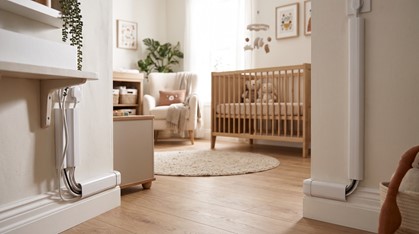
You don't have to turn your home into a padded cell or ban every electrical gadget from your nursery. A few sensible precautions can make a big difference to protect your little explorer from electrical hazards, and here are some practical ways to toddler-proof your setup.
Prioritise RCD Protection
If you're living in an older home, it's likely equipped with an old fuse box to distribute electricity to different lights, appliances, and rooms, including the nursery. While it serves its purpose, a traditional fuse box can pose significant safety risks in family homes since it lacks a safety switch known as a Residual Current Device (RCD). This life-saving device instantly shuts off an electrical circuit when it detects electricity leaking along an unintended path, such as through a person. Once the RCD detects an imbalance between outgoing and incoming currents, it cuts the power in less than a second, preventing electrocution or fires.
To keep everyone in the family safe, call a local electrician and ask them to replace your fuse box with a consumer unit. After checking your wiring to see if it can support the new unit, a licensed electrician will disconnect the fuse box from the main power source, install the consumer unit, then test the circuits to see if they're working well. The whole process usually takes about four to eight hours, so block off the time for the electrician's visit, and keep your toddler away from the work area until everything has been tested and signed off.
Avoid Using Plastic Socket Covers
In the US and other parts of the world, parents typically use socket covers as part of their toddler-proofing strategy. However, using plastic socket covers in UK homes is not advisable since standard 13-amp sockets are already designed to be child-safe by default. Using covers can actually create electrical hazards since poorly sized or warped covers can loosen internal spring contacts, causing overheating, poor connections, or electrical arcing. Many plug-in covers can also be easily removed by persistent toddlers, and the cover itself can be used to tamper with the socket.
If you need to physically block your toddler's access to wall sockets in the nursery, use a full-face lockable socket cover box that encloses the whole socket and even active plugs. As an added layer of safety, turn off individual socket switches when appliances are not in use.
Keep Cables and Extension Leads Out of Reach
Sockets aren't the only hazards to be worried about. Once your toddler starts pulling themselves up on furniture, trailing appliance cables can become incredibly tempting, and your little one may try to tug, chew, or even play with them. Meanwhile, an extension lead on the floor can become a trip hazard, so manage all cables and extension leads as early as possible to prevent injuries.
Position the cot, changing table, and other nursery furniture in such a way that your toddler cannot reach electrical cables. Use cable ties or clips to keep wires secured against walls or furniture instead of allowing them to trail on the floor. Also, be careful with extension leads and only use them if it's absolutely necessary. Never overload them, and avoid connecting one lead to another lead. If you find that you always have to use an extension lead in the nursery because a wall socket isn't conveniently located, consider asking an electrician to install additional sockets in the room.
Secure Lamps and Other Electrical Appliances
Lamps and other freestanding appliances can pose safety risks if a curious toddler decides to get a closer look at them. If a child uses a lamp stand to pull themselves up, for instance, they could knock the whole thing over, exposing themselves to broken bulbs or live electrical components. When choosing lamps for the nursery, be sure to pick ones with a wide, sturdy base, and place them somewhere where your toddler cannot reach.
If you're using a fan, heater, or a humidifier in the nursery, position them away from your toddler's cot, bedding, and other objects that can easily catch fire. When not in use, unplug all appliances, including small electrical items like chargers. It's easy to leave a phone charger plugged in beside the cot when you're rushing through bedtime, so make sure to unplug it and take it with you when you leave the room. Don't leave phones, tablets, or other gadgets charging or within your toddler's reach either. Lastly, if you're planning to get a night light, pick one that meets UK safety requirements, and plug it in a socket that's far away from bedding and other flammable materials.
Take a few minutes to observe the nursery from your toddler's perspective to reveal hidden electrical hazards. By taking the necessary precautions, you can create a safer place where your little one can sleep, play, and explore.