Why Wooden Baby Toys Are Making a Comeback
Walk into any modern nursery today and you'll notice an obvious shift away from noisy, synthetic gear. Bright plastic items with flashing lights are giving way to timber designs that are built to last. Read on to find out why so many UK parents are making the permanent switch back to natural wood.
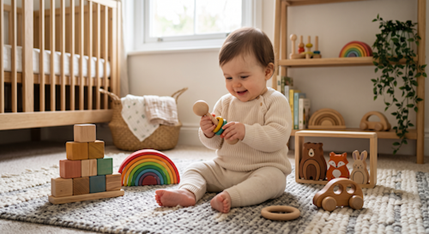
Sensory Benefits of Natural Timber for Babies
Babies learn about the physical world entirely through touch, mouth exploration, and movement. Synthetic plastic objects are uniform, smooth, and cold, offering very little sensory variation. Natural wood provides subtle textures, natural warmth, and gentle variations in grain that stimulate a child's tactile senses far more effectively.
Weight plays an essential part in early motor skill development. Wooden blocks, rings, and rattles are naturally heavier than thin hollow plastic alternatives. Holding and lifting these items helps infants build grip strength, spatial awareness, and muscle control as they practise reaching for objects during play. In fact, reacting to the physical feedback of heavier materials teaches babies how to adjust their strength when picking up different items.
Sustainable Wooden Alternatives for Modern Nurseries
For years, plastic dominated the nursery market because it was cheap to produce. However, environmental concerns and a desire for healthier indoor environments have shifted buying habits across the country. Wood is renewable, biodegradable, and free from synthetic chemicals like BPA or phthalates. That makes timber a much safer option for infants who put almost everything straight into their mouths.
This material shift extends far beyond basic building blocks and simple teething rings. Today, parents can source timber replacements across almost every nursery category, from activity gyms to large play items. For example, a wooden baby bouncer now offers the same adjustability and interactive features as plastic equivalents while fitting seamlessly into home decor. Modern brands like Little Hoppa, founded by a female entrepreneur focused on design-led products, use sustainable birch plywood with non-toxic finishes so gear looks attractive without sacrificing functionality.
Long-Term Value and Mindful Consumption
Buying wooden baby toys also represents a clear shift towards mindful consumption in family life. Plastic toys frequently break, snap, or lose their appeal once the internal battery runs out. Wooden items endure years of energetic play, meaning families can pass them down to younger siblings or share them with friends instead of throwing them away. It's worth pointing out that well-crafted timber items often retain their value long after a baby outgrows them.
Investing in fewer, high-quality pieces reduces clutter in the home and encourages deeper imaginative play. When toys don't flash or make artificial sounds, babies use their own curiosity to invent games. That simple shift in play style supports concentration and keeps children engaged for longer periods. Parents notice that kids spend more time exploring simple wooden shapes than they do pressing buttons on electronic gadgets.
What to Look For Before You Buy
When shopping for natural nursery items, parents should check a few key details to ensure maximum safety and durability:
* Certified sustainable wood: Look for FSC-certified timber to ensure the material comes from responsibly managed forests.
* Non-toxic finishes: Check that paints and sealants are water-based and food-safe for teething babies.
* Smooth edges: Ensure all surfaces are thoroughly sanded to prevent splinters during daily use.
A Lasting Shift Towards Natural Childhood Play
The return of wooden toys is more than just a passing design trend. It reflects a fundamental change in how parents think about safety, sustainability, and early child development. Choosing natural timber gives infants rich sensory experiences while helping families build clutter-free homes filled with durable, beautiful gear.
As more brands embrace thoughtful design and non-toxic craftsmanship, creating a safe and stimulating nursery environment becomes simple. Swapping out plastic for wood creates a calm play space that benefits your child today and protects the environment for their future.