Why Outdoor Adventure Camps Are Perfect for Young Explorers
Watching your child explore the world away from screens can be a refreshing experience. Outdoor adventure camps give children the chance to try new activities, spend time in nature and build skills they can carry into everyday life.
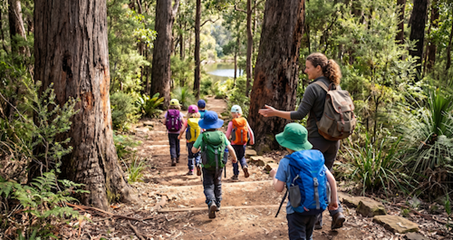
For parents looking for experiences that support their child’s development, camp can offer far more than a way to fill the school holidays. It gives children space to become more independent, connect with others and discover what they are capable of doing.
The Case for Getting Kids Outdoors
Spending time outdoors gives children opportunities to move, explore and engage with their surroundings in ways that are difficult to recreate inside.
Regular physical activity supports children’s health, development, concentration and mental wellbeing. Outdoor camps combine that movement with social interaction, practical learning and a welcome break from everyday digital distractions.
At camp, children are not simply told how to solve a problem. They are given opportunities to work it out for themselves, often with the support of their peers and trained facilitators.
They might need to navigate a trail, complete a team challenge or learn how to prepare food outdoors. These experiences encourage curiosity and help children become more comfortable with unfamiliar situations.
The Great Aussie Bush Camp is one example of a structured outdoor education provider offering programs in Australian bushland and waterfront settings. Experiences like these allow children to take part in nature-based activities while learning in a supervised environment.
Building Confidence Through Challenge
One of the most valuable outcomes of outdoor adventure camps is the confidence children can develop through completing challenges.
When a child finishes a ropes course, follows a bush trail or attempts an activity for the first time, they receive clear evidence that they can do something that once felt difficult.
That feeling matters.
At camp, children can take manageable risks with guidance and supervision. Each success, even a small one, can help them trust their own judgement and abilities.
A child who is usually hesitant may volunteer to lead part of an activity. Another might overcome a fear of heights or speak up during a team task. These moments may seem small, but they can influence how children approach challenges when they return home or school.
Well-designed activities introduce challenges gradually, allowing children to stretch beyond their comfort zones without placing them under unnecessary pressure.
This type of confidence can be difficult to develop through classroom learning alone because camp gives children the chance to learn through direct experience.
Social Skills That Last Beyond Camp
Adventure camps are also highly social environments. Children may spend time with classmates they do not usually speak to or meet peers from different schools and backgrounds.
Group activities require them to communicate, cooperate and sometimes compromise. They learn when to lead, when to listen and how to support others when a challenge becomes difficult.
For children who find social situations challenging, camp can provide a fresh setting without the usual routines or friendship groups they experience at school.
Activities such as bush cooking, wildlife spotting and team navigation often depend on collaboration. Children quickly learn that the group is more likely to succeed when everyone contributes.
These shared experiences can help children form stronger connections and understand that people may approach the same problem in different ways.
Inclusive Opportunities for Young People
Many outdoor education providers are working to make their programs more inclusive for children with different abilities, needs and backgrounds.
However, not every camp offers the same level of accessibility or support. Parents should speak directly with the provider about their child’s medical, physical, sensory, dietary or emotional needs before booking.
Parents can also ask how activities are adapted, what staff support is available and what safety or risk-management procedures are followed.
Some schools, charities and community organisations may offer subsidies or supported places for families who need financial assistance. Availability varies, so it is worth asking the school or camp provider what options may be available.
Nature Education and Environmental Awareness
Outdoor camps do more than encourage physical activity. They can also help children develop a stronger connection with the natural world.
Seeing a lizard on a bushwalk, observing birds in the morning or learning to identify native plants can make environmental topics feel more real than they do in a textbook.
Children may also learn how to care for shared outdoor spaces, minimise waste and respect local wildlife.
These experiences can encourage curiosity and help children understand that the environment is not simply something they study. It is something they interact with and have a responsibility to protect.
Time outdoors may also give children a break from some of the pressures and distractions of everyday life. Combined with movement, social connection and structured activities, this can create a positive and memorable experience.
Why Parents and Schools Choose Camp Experiences
Outdoor education is recognised as a useful setting for developing collaboration, self-reliance, leadership and environmental understanding.
Camp programs complement classroom learning by allowing children to practise these skills in real situations. They may need to manage their belongings, follow a schedule, solve problems with limited resources or support a teammate who is struggling.
Parents may also choose camp because it gives their child an opportunity to experience independence in a structured environment.
The effects may not always be dramatic or immediate. However, children can return with a stronger willingness to try new things, manage small responsibilities and approach challenges with more confidence.
Outdoor learning also gives children practical opportunities to strengthen personal and social skills by working with others, making decisions and reflecting on their experiences.
A Gift Worth Giving
Outdoor adventure camps offer children something increasingly valuable: time away from familiar routines, space to explore and opportunities to face real challenges.
They can build friendships, learn practical skills and discover strengths they may not have recognised before.
For parents considering outdoor education, researching reputable camp providers is a sensible first step. Look at the activities offered, staff qualifications, supervision arrangements, accessibility and how the provider manages safety.
The goal is not simply to send your child away for a few days. It is to give them an experience that encourages curiosity, confidence and greater independence.
Those are benefits that can continue long after camp is over.