When 8 Hours Isn’t Enough: The Overlooked Impact of Sleep Apnea in Families
You finally get your child down, tidy up the kitchen, and collapse into bed at a reasonable hour. Yet every morning you drag yourself awake feeling like you never rested at all. If this is your reality, you’re not alone — and stress or a newborn phase might not be the whole story. For many Australian parents, chronic exhaustion is a sign of something that goes unnoticed for years: sleep apnea. Effective treatment for sleep apnea is available, and specialists like the orthodontists at Smile Team can help you understand whether your symptoms warrant further investigation. Understanding what’s actually happening during those seemingly adequate hours of sleep is the first step towards feeling like yourself again.
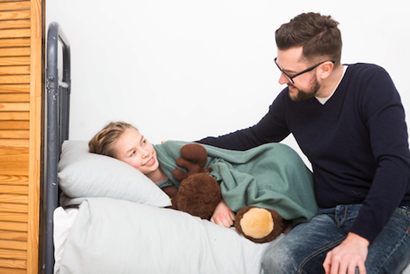
What makes sleep apnea particularly easy to miss in parents is that the symptoms - exhaustion, brain fog, irritability - mirror the everyday demands of raising children. It’s all too easy to put it down to a busy household or a child who doesn’t sleep through the night. But when the tiredness persists even after a full night in bed, it’s worth looking more closely at your own sleep quality.
What Is Sleep Apnea and Why Does It Go Undetected?
Sleep apnea is a recognised medical condition in which your breathing repeatedly stops and starts during sleep. These pauses - called apnoeic events, happen because your airway becomes partially or completely blocked. Each time your oxygen levels dip, your brain briefly pulls you out of deep sleep so the airway can reopen. You probably won’t remember any of it in the morning, but your body absolutely registers the disruption.
The result is that you can spend a full seven to nine hours in bed and still wake up feeling depleted, because your brain never reached the deep, restorative stages of sleep it needs. For parents already running on limited reserves, this kind of sleep debt compounds quickly.
Why Parents Often Miss the Signs
When you’re in the thick of parenting, fatigue feels like a given. You assume you’re tired because you’re busy -because the children woke in the night, because your mind won’t switch off, because there’s simply too much to do. Sleep apnea doesn’t announce itself loudly. It hides in plain sight.
Your partner might mention your snoring, or comment that you stopped breathing for a moment in the night. You might notice you’re short-tempered during school drop-off, or that you can’t retain information at work the way you used to. These are easy to dismiss as parenting side effects - but they’re also classic signs of a sleep disorder that can be assessed and treated.
The Difference Between Quantity and Quality of Sleep
One of the most important things to understand is that sleep apnea isn’t about hours in bed - it’s about what happens during those hours. During a healthy night, your brain cycles through light sleep, deep sleep, and REM sleep approximately every 90 minutes. Deep sleep is when your body repairs itself and your immune system consolidates. REM sleep is when memory, learning, and emotional regulation happen.
With sleep apnea, these cycles are constantly interrupted. Your brain is dragged back towards lighter sleep every time an apnoeic event occurs - sometimes 15 to 30 times per hour. That means eight hours in bed might only deliver the genuine restorative benefit of four or five hours. For a parent trying to show up fully for their family, that gap is significant.
How Sleep Apnea Affects Your Daily Life as a Parent
The ripple effects of untreated sleep apnea go well beyond feeling tired. Each time your breathing pauses during the night, your body triggers a stress response: heart rate increases, blood pressure spikes, and cortisol floods your system. Repeat this hundreds of times per night, and the cumulative impact becomes impossible to ignore during the day.
Research from the Better Health Channel highlights how chronic sleep disruption affects cognitive function, emotional well-being, and cardiovascular health - all things that matter enormously when you’re responsible for raising children.
Cognitive and Emotional Impact
Parents with undiagnosed sleep apnea often describe a mental fog that never quite lifts. Forgetting appointments, losing patience during homework time, or feeling overwhelmed by tasks that should be manageable - these are all consistent with the cognitive impairment that comes from fragmented sleep. Decision-making suffers, reaction times slow, and emotional regulation becomes harder.
Mood changes are particularly telling. Irritability, low frustration tolerance, and even symptoms of depression can all stem from the chronic sleep deprivation that sleep apnea causes. When you’re consistently running on empty, the emotional reserves needed for patient, responsive parenting simply aren’t there, and that can be distressing for parents who can’t understand why they feel so flat.
Symptoms to Watch For
Beyond exhaustion and mood shifts, there are several other warning signs that sleep apnea might be the culprit. Morning headaches that ease as the day progresses are common, caused by the build-up of carbon dioxide and reduced oxygen levels overnight. A dry mouth or sore throat on waking often indicates you’ve been breathing through your mouth - another sign the airway is compromised.
Falling asleep easily during quiet moments - when you’re watching television, sitting in a school waiting room, or even driving - is a significant red flag. If you’re finding it hard to stay alert during tasks that require your full attention, that’s your body telling you something is seriously wrong with your sleep.
Sleep Apnea in Australian Families: Who Is at Risk?
Sleep apnea is more prevalent than many people realise. Current estimates suggest around 5% of Australian adults have been formally diagnosed, but the actual number is considerably higher when accounting for undiagnosed cases. The condition is especially common in men over 30, with research suggesting roughly one in four men in that age group may have some form of obstructive sleep apnea (OSA). Women are also at risk, particularly after childbirth or during perimenopause, when hormonal changes can increase airway vulnerability.
Risk Factors Relevant to Parents
Certain factors increase the likelihood of developing sleep apnea, some of which are particularly relevant to parents of young children. Weight gain - including the gradual changes that often accompany having children - is one of the strongest risk factors. Excess weight around the neck puts pressure on the airway, making it more likely to collapse during sleep.
Anatomy also plays a role. A naturally narrow airway, enlarged tonsils, a recessed chin, or a thick neck can all contribute to obstruction. If sleep apnea runs in your family, you’re at higher risk. Lifestyle factors compound the issue: alcohol - a common stress reliever for busy parents - relaxes the throat muscles and makes apnoeic events more frequent and severe. Sleeping on your back, which many exhausted parents do, worsens the problem by allowing soft tissues to fall backwards and narrow the airway.
Sleep Apnea Can Affect Children Too
It’s worth noting that sleep apnea isn’t exclusively an adult condition. Children can and do develop it, often going undiagnosed for similar reasons - the symptoms can look like behavioural issues, inattention, or simply being a restless sleeper. According to healthdirect.gov.au, children with sleep-disordered breathing may display hyperactivity, difficulty concentrating at school, mouth breathing, and bed-wetting. If your child snores regularly, breathes through their mouth, or seems unusually tired or difficult to manage during the day, it may be worth raising with their GP.
How Sleep Apnea Is Diagnosed and Treated
The reassuring news is that sleep apnea, once identified, responds well to treatment. For parents who’ve spent months or even years putting their own health last, taking this step can genuinely transform daily life - not just for you, but for your whole family.
The first step is speaking with your GP. Describe your symptoms honestly - the exhaustion, the brain fog, any morning headaches, and anything your partner has noted about your breathing or snoring during the night. Your doctor can assess whether a sleep study is appropriate.
How Diagnosis Works
Confirming sleep apnea requires objective measurement rather than symptom description alone. This is done through a sleep study (polysomnography), which records your brain activity, heart rate, breathing patterns, oxygen levels, and body movement during sleep. You can undergo this either in a specialist sleep clinic overnight, or increasingly with a portable home monitoring device — a more practical option for parents who can’t easily spend a night away from home.
The results show how many apnoeic events you’re experiencing per hour and how significantly your oxygen levels are dropping. Orthodontists with a focus on sleep disorders, such as those at Smile Team, can also contribute to the diagnostic picture by identifying the oral and facial features that may be narrowing your airway.
Treatment Options
Treatment depends on the severity of the condition. For moderate to severe sleep apnea, a CPAP (Continuous Positive Airway Pressure) machine is typically the first-line recommendation. It delivers a steady stream of pressurised air through a mask during sleep, keeping the airway open. Modern CPAP devices are considerably quieter and more comfortable than earlier models, and most people adapt within a few weeks.
For mild to moderate cases, or for people who find CPAP difficult to tolerate, mandibular advancement devices (MADs) are a well-supported alternative. These custom-fitted oral appliances - similar in appearance to a mouthguard - position the lower jaw slightly forward during sleep, which keeps the airway open and prevents soft tissue collapse. An orthodontist can fit and calibrate these devices to ensure both comfort and effectiveness.
Lifestyle adjustments are valuable regardless of which treatment pathway you take. Reducing alcohol consumption (particularly in the hours before bed), sleeping on your side rather than your back, and addressing excess weight can all meaningfully reduce the severity of symptoms. In some cases, surgical options may be considered typically where other treatments haven’t achieved adequate results.
What You Can Do Right Now
If any of this resonates, it’s worth taking it seriously rather than filing it under “I’ll deal with it later.” Sleep apnea doesn’t tend to improve without intervention, and for parents, the costs of leaving it untreated extend well beyond personal wellbeing.
Practical Steps for Busy Parents
Start by keeping a brief sleep diary for a week. Note your bedtime, wake time, how you feel in the morning, and any symptoms during the day (headaches, brain fog, irritability). If your partner shares a bed, ask them to note any snoring, breathing pauses, or restlessness they’ve observed. This simple record gives your GP valuable information to work with.
Book an appointment with your GP and be straightforward about how you’re feeling. Parental fatigue is easy to dismiss, but persistent, unrelenting tiredness that doesn’t respond to rest is a legitimate medical concern. If you’re also noticing signs in your child - snoring, restless sleep, mouth breathing, difficulty concentrating - raise that too.
If you’re referred for further investigation, or if you’re interested in whether oral appliance therapy might suit you, a consultation with an orthodontist who specialises in sleep-disordered breathing is a sensible next step. The team at Smile Team can assess your airway anatomy, discuss whether a mandibular advancement device may be appropriate, and work alongside your GP or sleep specialist to ensure you receive coordinated care.
The Long-Term Cost of Leaving It Untreated
It can be tempting to rationalise the fatigue, especially when you’ve been managing for so long that exhaustion feels normal. But untreated sleep apnea carries real health risks that compound over time, and the implications extend to your family as well.
Health Consequences
The repeated overnight drops in oxygen and surges in stress hormones put sustained pressure on the cardiovascular system. People with untreated OSA have significantly elevated rates of high blood pressure, irregular heart rhythms, heart attack, and stroke. Type 2 diabetes risk also increases, as sleep deprivation disrupts glucose processing and insulin sensitivity. Mental health is affected too, chronic sleep deprivation is strongly linked to depression and anxiety, both of which make the demands of parenting considerably harder to meet.
Impact on Family Life
Beyond the medical statistics, there is the day-to-day reality of parenting while profoundly sleep-deprived. You’re more likely to be reactive rather than responsive, more likely to lose perspective over minor frustrations, and less able to be present in the moments that matter. Driver fatigue is another real concern: information from the Australian Institute of Health and Welfare notes that fatigue is a significant contributor to road accidents, and the risk is meaningfully higher for people with untreated sleep apnea.
Treatment changes this picture. Many parents describe getting help for sleep apnea as transformative, not just because they finally feel rested, but because they become more patient, more engaged, and more like the parent they want to be. Energy returns. Concentration improves. The daily grind becomes manageable again.
Taking That First Step
If you’ve recognised yourself in any part of this article, the most valuable thing you can do is act on it. Sleep apnea is a treatable condition, and the sooner it’s addressed, the sooner you can get back to feeling like yourself and to being fully present for the children who need you.
Speak to your GP, track your symptoms, and if you’d like to explore whether your airway anatomy is contributing to the problem, consider reaching out to an orthodontist who understands sleep-disordered breathing. You deserve restorative sleep and so does your family.