What to Actually Look For in a Children’s Mattress
Shopping for a child’s mattress throws up a great deal of marketing and not much plain guidance. Strip the noise away and there are only a handful of things that genuinely matter for a young child, alongside a long list of features that sound reassuring and change very little. Knowing which is which saves money and, far more importantly, keeps a child safe and well supported through the years that matter most for a growing body.
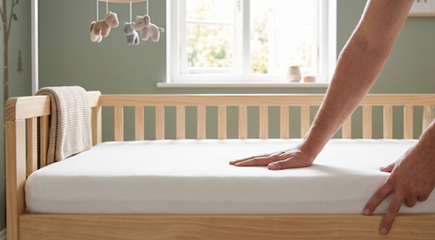
Firmness comes first
Firmness comes first, and it runs against everything adults instinctively want for themselves. Babies and young children need a firm, flat surface, not a soft, sinking one. A plush mattress that an adult would find luxurious is a genuine suffocation risk for the youngest children, and it gives a developing spine nothing to work against. Firm feels almost unforgiving to an adult hand pressing on it, but that firmness is precisely what a small body needs, and softness is the quality to be wary of rather than to seek out.
A snug fit is non-negotiable
Fit is the next non-negotiable, and it is easy to overlook. The mattress must sit snugly within the cot or bed frame with no gap around the edges, because a gap is a trap into which small limbs and, more dangerously, heads can slip. The standard guidance is that it should not be possible to fit more than two fingers between the mattress and the frame. Measuring the frame before buying, rather than assuming a stated size will fit, prevents a dangerous gap that is all too easy to create by accident.
Materials that actually matter
Materials are where genuine quality shows, and where kids’ mattresses built with safety in mind really matter. The features worth looking for are breathable layers that help air move and reduce heat building up against the child, covers free from harsh chemical treatments, and certifications confirming that the foams and fabrics have actually been tested rather than merely labelled as safe. Recognised safety and emissions standards mean something concrete; vague reassurances printed on the packaging do not. It is worth knowing the difference and looking for the former.
Cleanability and breathability
Cleanability sounds like a minor convenience until the first illness or the first leak, at which point it becomes the single most appreciated feature of the whole purchase. A removable, washable cover is not a luxury with a young child but a practical necessity, the difference between a quick wash and a ruined mattress. Waterproof or water-resistant layers earn their keep repeatedly, through teething, through tummy bugs, and especially through the long, unpredictable stretch of potty training.
Breathability deserves singling out because it touches both comfort and safety. Young children regulate their temperature less effectively than adults and can overheat easily, so a mattress that allows air to circulate rather than trapping heat against the body helps keep a child comfortable through the night. Good airflow also helps manage the inevitable moisture, keeping the sleeping surface fresher between cleans and less hospitable to the dust and damp that can aggravate little airways.
New or hand-me-down?
The question of buying new versus inheriting comes up in almost every family, and the honest answer depends on the child’s age. For the youngest, a fresh mattress is the safer choice, because a second-hand one may have lost its firmness, taken on moisture invisibly, or no longer meet current safety standards. For an older child well past the highest-risk years, a good-quality hand-me-down in sound condition is usually fine. The early years are simply not the place to economise on this particular item.
Built to be jumped on
Durability matters because a child’s mattress takes a beating that an adult’s never does. Children jump on beds, treat them as trampolines, and generally test them to destruction, and a flimsy mattress sags and loses support far sooner than its honest lifespan should allow. A well-made mattress holds its shape and support through years of enthusiastic abuse, which makes the slightly higher initial cost the cheaper option over the time the child will actually use it.
Size now, and when to upgrade
Size and longevity are worth planning around rather than guessing at. Children grow with startling speed, and a mattress bought to fit perfectly today may feel short within a couple of years. Choosing a frame and mattress with a sensible eye on the near future, without overshooting into a surface unsuitable for the child’s current size, strikes the balance between supporting them now and not having to replace everything again almost immediately.
Knowing when to move a child on to a larger mattress is part of getting the whole thing right over time. A mattress that fit perfectly for a toddler will eventually be outgrown, and the signs are usually plain: a child whose feet reach the end, who seems cramped, or who has simply moved up to a larger bed frame. Upgrading at the right point keeps a growing body properly supported, since a too-small or worn surface offers a child no more benefit than a worn one offers an adult. Planning for that step, rather than stretching an outgrown mattress for an extra year, keeps a child sleeping well through every stage of growing up.
The four things that count
Get the firmness, the fit, the materials, and the cleanability right, and the genuinely important boxes are ticked; nearly everything else is detail and personal preference. A children’s mattress does not need to be the most expensive on the shelf or laden with every advertised feature. It needs to be firm, to fit safely, to be made from tested materials, and to be cleanable, and a mattress that does those four things well is one a parent can put a child to sleep on with complete confidence.