What Makes a Good Bedtime Story? 7 Things to Look For
It’s seven o’clock. Teeth are brushed, pyjamas are mostly on, and a small person is holding up a book about a dinosaur who throws a party and refuses to go to bed.
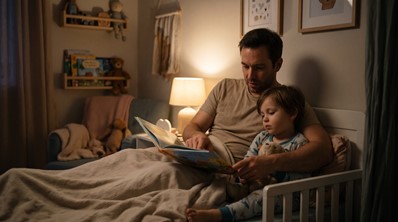
Some stories send children off to sleep. Others send them bouncing off the walls. There isn’t one perfect bedtime story, and a book that delights your child after lunch can feel far too exciting when they’re tired. But knowing what makes a good bedtime story makes choosing one quicker, and bedtime a lot calmer.
The children’s reading charity BookTrust explains how shared reading supports a good bedtime routine, settling a child’s busy thoughts and signalling that sleep is on its way. And an Ohio State University study estimated that children who are read one picture book a day hear around 290,000 more words by age five than children who aren’t regularly read to. Here are seven things to look for when you’re choosing what to read tonight.
1. An ending that slows down
The most important pages of a bedtime story are the last few. Look for stories where the excitement happens in the middle and the final pages grow quieter: the main worry is resolved, the action eases off, and there’s a moment to enjoy where the characters have ended up.
That ending doesn’t need a bed or anyone falling asleep. Sharing a meal, arriving home or sitting together after an adventure all make a satisfying place to stop. What to avoid is a cliffhanger or a big final joke, which wakes the brain up just when you want it winding down.
A quick test: read the last two pages aloud in the shop or library. If your voice naturally softens and slows, it’s a bedtime book. For longer books, choose your stopping point before you begin. A chapter that ends with something settled works better tonight than one that leaves a character in trouble.
2. The right length for tonight
For toddlers and preschoolers, aim for a story you can read in five to ten minutes. Most picture books are shorter than parents expect: the same Ohio State researchers counted an average of 228 words in popular picture books and 140 in board books.
Start with the time and energy you actually have. A story that runs long turns into a negotiation, and a tired child stops listening halfway through. Keep one very short favourite in reserve for nights when everyone is running on empty.
If choosing takes ages, offer two books you’d be happy to read: “Shall we have the bear story or the moon story?” Your child still gets a say, without a search through the whole bookshelf.
Attention spans grow quickly between two and five, so a book that’s perfect at three can feel thin at five. The age on the cover is a starting point; your child’s interest matters more. This guide to bedtime stories by age breaks down what tends to work at each stage, from length to how complicated the plot can be.
3. Words that feel good to hear
Young children love patterns they can predict. Repeated phrases, gentle rhymes and a steady rhythm are soothing to listen to and easy to join in with. Before you commit to a new book, read a paragraph aloud. Does it flow? Is there a refrain your child might enjoy saying with you?
Those patterns are good for language too. Hearing the same words in a predictable rhythm helps toddlers pick out sounds and remember new vocabulary, and an unfamiliar word can be part of the pleasure when the picture helps explain it. A line your child can say with you also gives them something calm to do with their voice, rather than asking for “just one more”.
The same goes for audio. If you use narrated stories, such as Storyboat’s original illustrated stories with read-aloud narration, listen to a sample first. You want a pace that gives your child time to follow what’s happening and look at the pictures.
4. Gentle stakes, not zero stakes
Children don’t want a story where nothing happens. They want a reason to listen. The best bedtime stories have a small problem at their heart: a lost kite, a missing cake, a friend who needs help.
What matters is how big the worry gets, and that depends on your child. A character getting lost might feel exciting to one child and unsettling to another. Peril should be mild, kind and solved well before the final page. Save lingering villains and frightening pictures for daytime, when there’s time to talk them through.
When choosing an unfamiliar story, skim the middle as well as the ending. A reassuring last page won’t always outweigh a scene your child finds scary.
If your little one is going through a clingy phase or a toddler sleep regression, stories where a character comes home or is reunited with someone they love can be especially reassuring.
5. Pictures worth lingering over
For under-fives, the illustrations tell half the story. Look for expressions they can recognise and small details to find, like a mouse hiding on every page or a moon that moves across the sky. A character’s drooping ears can say more than a sentence explaining that they’re disappointed.
Let your child linger when something catches their eye. You can follow their pointing without asking a question about every page; quietly looking together counts as storytime too.
At bedtime, softer colours and calmer scenes towards the end help everything wind down. Busy, bright pages packed with flaps and noises are better saved for the afternoon.
6. Feelings, without a lecture
A small disappointment, a friendship wobble or nerves about starting nursery give children plenty to recognise. The best bedtime stories let those feelings unfold through what the characters do, without the narrator stepping in to spell out the lesson. Meeting a character who feels what they feel can help a child make sense of their own day before sleep.
Leave a little room to talk. Pausing to ask “How do you think the bear feels?” or “What do you think happens next?” is where a lot of language learning happens, and these little chats are often what children remember most.
Keep it light, though. There’s no need to finish with “And what did we learn?” If your child just wants to know whether the rabbit found its hat, that’s enough. Bedtime is for cuddles, not a quiz.
7. A favourite you’ll happily read again, and something new
Toddlers adore repetition. Hearing the same story night after night is comforting: they enjoy knowing what comes next, spotting a detail they missed, or saying a favourite line before you do. So it’s worth choosing books you won’t dread reading for the fortieth time.
A fresh story now and then matters too. It brings new words and ideas, gives your child something to look forward to, and gives you a break from the one you can recite in your sleep. Keep a small selection within reach that mixes a few firm favourites with a steady trickle of new titles, which is where your local library comes in.
When tonight’s story doesn’t work
Look for a slow ending, a manageable length and a small adventure that lands softly, and the rest tends to follow. But even a well-chosen book will sometimes miss. If it does, you can put it down. Swap it for an old favourite, tell a tiny story of your own, or finish with a cuddle.
The best bedtime story is the one that ends with a calm child and a few quiet minutes together, even on an evening when very little else has gone to plan.
Bedtime story FAQs
How long should a bedtime story be?
For toddlers and preschoolers, five to ten minutes is plenty. That’s usually one picture book, or two very short ones. If your child is still wide awake at the end, a shorter story read slowly works better than adding more.
What age should you start bedtime stories?
You can start from birth. Babies won’t follow the plot, but they love the sound of your voice and the closeness. Board books with simple pictures work well for the first year or two, moving on to picture books as your child starts to follow a story.
Is it OK to read the same bedtime story every night?
Yes. Repetition is comforting for young children and helps them learn new words and predict what comes next. Mix in something new every so often to keep bedtime fresh for both of you.
Are scary stories OK at bedtime?
Mild peril is fine and often makes a story more gripping. Keep anything genuinely frightening for daytime, and choose stories where the problem is solved well before the last page. If your child is anxious about separation or the dark, skip stories built around those fears for now.
If you’re looking for stories written with these ideas in mind, Storyboat has a library of original illustrated bedtime stories for children aged 3 to 8, each with a gentle adventure and a calm ending. You can listen along with the narration or read them together at your own pace, and some are free to try.