The Cot Sheet Nobody Warns You About Before the Baby Arrives
You will go through more cot sheets in the first year than you ever expected. Not because they wear out, because they get used up. Milk, nappy leaks, posset, the occasional mystery substance you'd rather not identify at 3am. Three sets minimum is the rule most midwives mention once, in passing, and most new parents discover the hard way.
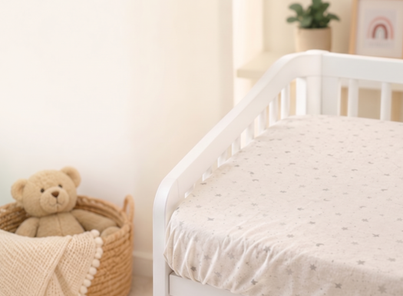
The problem isn't buying enough of them. It's buying the wrong ones and having to replace them anyway, sheets that don't fit the mattress properly, go thin after ten washes, or pill in a way that starts to feel rough against a baby's skin.
Here's what's actually worth knowing before you buy.
Fit Matters More Than Anything
A cot sheet that doesn't fit snugly is a safety issue, not just an annoyance. Loose fabric that bunches or rides up in the night is one of the things the Lullaby Trust specifically flags in safe sleep guidance. This sounds obvious until you're standing in a shop holding a sheet with no clear size markings and no way to tell whether it'll actually stay on the mattress you bought.
Standard UK cot size is 60 x 120 cm. Cot bed size, which most parents transition to around six months, is 70 x 140 cm. These are not interchangeable. If you're buying ahead, buy for the size you'll use longest, which is usually the cot bed.
Knitted jersey cotton fitted sheets are worth knowing about specifically. The stretch in the knit means they grip the mattress corners properly and stay put through a restless night far better than woven fitted sheets with elastic only at the corners. The Towel Shop's baby cot bed knitted fitted sheet is 100% cotton and made to cot bed dimensions, the knit construction is the detail that makes the practical difference here.
Flat Sheets: Worth Having Even If You Don't Use Them Early
NHS and Lullaby Trust guidance recommends against loose bedding for babies under 12 months. Which means the flat sheet you buy for the nursery probably won't go in the cot until after the first birthday.
It's still worth having them. A flat sheet used as a light layer in a warm room, tucked firmly under the mattress with no loose edges, is a practical option as babies get older. And they're useful well before the cot, flat cotton sheets have a dozen uses in the first year, from covering changing mats to using as a light blanket in a pram on a warm day.
The Towel Shop's 100% cotton flat sheet for cot beds is worth having in the nursery from the start even if it goes in a drawer until month twelve.
How Many Do You Actually Need
Three fitted sheets per cot is the working minimum - one on, one in the wash, one clean and ready. Four is more comfortable if you do laundry every other day rather than daily. If you're doing nursery runs and relying on the nursery to handle daytime changes, three at home is fine.
Buying the same sheet from the same supplier each time matters more than people realise. Sheets from different manufacturers vary slightly in dimension even at the same nominal size — so a fitted sheet bought separately six months later may not grip the mattress the same way. Buying your full set in one go from one source solves this.
The Towel Shop's baby bedding range and Absolute Home Textiles both supply the same core cot and cot bed sizes consistently - useful when you're rebuying rather than starting from scratch. For those setting up multiple rooms or buying for a childminding setting, British Wholesales' baby linen collection covers the same cotton sheets and blankets with no minimum order, which works just as well for one cot as for ten.
Material: Cotton Is Still the Answer
100% cotton breathes. It washes at 60°C - the temperature you need for genuine hygiene rather than just freshening up. It softens with each wash rather than going rough. And it doesn't cause the static that some synthetic blends can.
Jersey cotton (the knitted kind) has slightly more give and tends to feel softer against skin from the first wash. Woven cotton is more structured and holds its shape longer over time. Both are fine, the choice between them is mostly about texture preference and whether you want the grip advantage of jersey for fitted sheets.
What to avoid: anything with a high polyester content. It doesn't breathe the same way, washes less effectively at temperature, and tends to feel warmer in a way that works against safe sleep temperature guidance.
The Bit Most People Skip
Wash everything before it goes near the baby. New sheets have a manufacturing finish that washes out in the first cycle and leaves the fabric noticeably softer. It also removes any residual processing that's entirely harmless for adults and simply not worth having next to a newborn's skin.
No fabric softener on anything that goes in the cot, it coats the fibres and reduces breathability. Cotton washed without softener, dried on a low heat, stays in better condition longer and continues to breathe the way it should.
The Short Version
Buy for cot bed size rather than cot, you'll use it longer. Knitted jersey fitted sheets stay on the mattress better than woven. Three sets minimum, four is more comfortable. Buy them all from the same source so the sizing is consistent. 100% cotton only. Wash before first use, skip the fabric softener.
The cot sheet is not the exciting nursery purchase. It's the one you'll be grateful you got right at 3am when you need a clean one in under thirty seconds.