The Connection Between Physical Activity and Toddler Development
There is no doubt that toddler years are a crucial time in the development of every child. From one to three years old, a child's physical capabilities are changing, they develop in their cognitive development, they become emotionally mature, and they are more sociable than ever before. During the toddler age, the physical development of all aspects above is really important. Not only does movement allow toddlers not to be too hyper, but movement also helps toddlers to learn how to develop. Parents will then be able to help toddlers develop properly and stay healthy for the rest of their lives when they understand the relationship between development and toddlers.
Understanding How Toddlers Develop
More than just gaining new physical skills, a toddler's development involves more; with children learning to run, walk, crawl, and explore, they are also developing language, problem-solving abilities, emotions, and social development, all of which are very closely linked in development as growth in one area aids development in another.
Many opportunities for practicing and learning a new skill or confidence are present within a toddler's active play. Toddlers gain this from stacking and tumbling, running to the park, and dancing.
Build strong bodies through movement
Physical play provides opportunities to improve a toddler's physical growth; these muscles are built through active play that will encourage muscles, bones, and joints to be strong, the flexibility of a toddler will improve.
A toddler will develop control over their movements through a wide variety of activities such as jumping, running, walking, climbing, and crawling. This provides toddlers with improved gross motor skills. Hand-eye coordination and fine motor skills will be improved through building block towers or drawing. Proper posture, awareness of their bodies, and overall fitness will be encouraged through constant movement.
How does physical activity enhance brain growth?
As well as improving physical development, activity also provides benefits for your toddler's brain. Many studies have shown that physical play encourages the growth of neural connections in young children's brains.
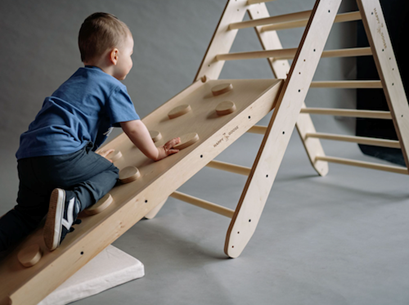
Children have to make many decisions and solve many problems when they play. While climbing a wall, the child has to decide how to reach the top and needs motor control and space awareness. With a ball, a child learns about movement and how to predict the outcome. Cognitive development will improve through better attention span and concentration, as children learn through identifying the results of their actions through cause and effect, leading to better intellectual growth.
Developing critical motor skills
As you might know, one of the many benefits that Toddlers undergo while they develop are crucial motor skills that will affect the way a child's life turns out, and are very important when they learn how to do certain things.
Gross motor skills are gained from a variety of movements such as jogging, jumping, climbing, etc. Which are essential for life's daily tasks, and how children participate in future sports activities. These and Fine motor skills are also benefited from activities that require finer skills, like drawing and using many building blocks for various creations. These activities will help children improve coordination. Toddlers with great gross motor and fine motor skills have greater self-esteem in challenging themselves, which promotes better development.
Encouraging toddlers' social development through active play
An increasing number of opportunities are available to children through physical activity. Children learn crucial social skills through this type of play. From attending parents & toddler groups, going to a park with children of their age, they learn important skills.
Children have the ability to share, cooperate, and communicate. Children understand the idea of taking turns and playing with one another; children learn not to intrude on other people's space. The relationship children build through social play and having confidence will make a bigger and better improvement. Children in group activity will learn how to function with teamwork in other schools or future situations.
Emotional growth as well as self-confidence development
Children will benefit greatly from physical activity. Learning can be frustrating, as it will have its obstacles. Physical play has provided a solution - by getting their frustration out, they can gain control of their emotions and be more resilient. Climbing over an obstacle gives a sense of achievement, which results in greater self-confidence and a more positive outlook on learning. A child can develop how they use body language to help themselves communicate more easily. Emotional and physical development and learning have a close link and will result in better stress levels.
Why structured activities?
There are many benefits for children in the toddler years to learn physical activities. Age-specific activities are available, which will help children build coordination, fitness and confidence. Water play or toddler gymnastic programs can help your child's movement, coordination, physical body control, and socialization, as well as listening skills to a teacher or parents. However, children will also benefit from the best mix of structure and free play.
Creating a positive relationship with fitness that will last a lifetime
Children's opinions toward physical activities may change over the years. Those children who perceive physical activities in terms of achievement and learning will continue doing so when they grow up. Physical activities may also contribute to many sleep benefits and an increased amount of energy. A life where less screen time will lead to more physical activity. Parents have an extremely important role; a healthy and active environment for their toddler, as well as active family play.
Conclusion
The importance of physical activity on toddlers' development is much greater than just improving physical development. Movement influences children's brain development, motor skill acquisition, social interaction, and emotional maturity during crucial stages. Through play and toddler fitness programs, parents can give their children the essential life skills they will need, along with a better and healthier future. Investing time in children's physical activities will encourage development that may lead them to better achievement.