Teaching Toddlers About Personal Safety During Family Outings
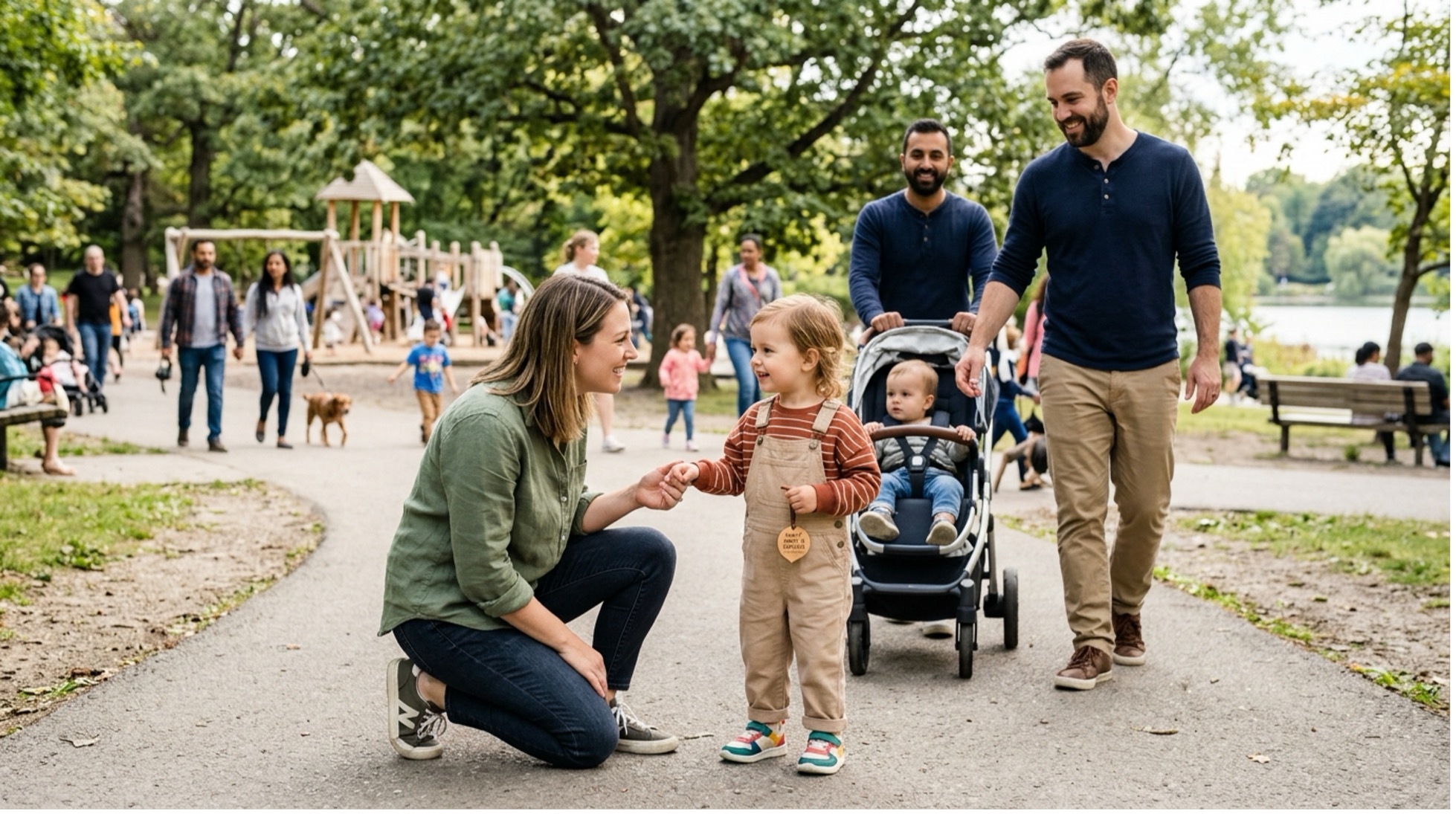
Family outings are an important part of life with toddlers. Trips to the park, walks around a museum, days out or even an evening visit to the supermarket introduce young children to new environments and experiences. For parents of children aged 0–5, personal safety is therefore a natural part of preparing for everyday activities.
Toddlers are still learning when to be cautious and when to explore. Curiosity often comes before an understanding of risk, so parents need to introduce safety gradually, using simple and calm explanations that help children develop practical skills.
The aim is not to raise children to fear unfamiliar places or people. Instead, parents can establish a few useful habits that reduce the chance of toddlers wandering away and help them understand what to do if something unexpected happens.
Start With Simple Safety Rules
For toddlers, instructions should be short and repeated regularly. Rather than giving a long list of warnings before every outing, focus on two or three rules that a child can remember.
For example:
-
Stay close to the grown-up you are with.
-
Hold hands near roads and car parks.
-
Ask before going somewhere.
-
If you cannot see your parent or carer, stop and wait.
Try to keep the wording consistent. Repeating the same phrases makes the rules easier for a toddler to recognise and remember.
These behaviours can also be practised during everyday routines at home. For example, children can learn to stop and wait for permission before opening the front door or leaving a room in an unfamiliar place. What seems obvious to an adult is often something a toddler still needs to learn.
Teach Children Their Name
A toddler is unlikely to remember a full address or telephone number, but recognising and saying their own name is a useful first step.
Use their full name naturally in conversation and, as they grow, begin introducing the names of parents or other regular caregivers.
Keep the exercise relaxed and playful rather than making it feel like a test. Games, songs or simple repetition can help children become familiar with the information.
Children develop these skills at different stages. If a toddler struggles to remember a name or other details, it does not necessarily indicate a problem. Age-appropriate repetition is generally more helpful than pressure.
Establish a Stay-Close Habit
Busy environments can be overwhelming for young children. Crowds, bright displays, noise and unfamiliar surroundings can easily distract a toddler.
Before entering a busy place, explain what 'staying close' means. For a young child, this might mean holding a parent's hand or remaining within arm's reach.
Make the expectation part of the routine. Before entering a crowded attraction, for example, you might simply say, 'We're going somewhere busy, so we're going to stay close.'
The same habit can be used at parks, markets, shopping centres, family attractions and outdoor events.
Explain What to Do If You Become Separated
One of the most useful safety lessons is teaching a child what to do if they can no longer see their parent or caregiver.
Avoid giving toddlers several complicated instructions. Instead, give them a simple plan: stop moving, stay somewhere safe and ask an appropriate adult for help.
In unfamiliar venues, parents can also point out help desks, information points or members of staff. Older preschool children may be able to understand the idea of a designated meeting point, while younger toddlers will generally require closer supervision.
Role-play at home can make the subject feel less frightening. A parent might ask, 'What would you do if you couldn't see me?' and gently practise the answer together.
Help Toddlers Recognise Safe Adults
Children can be taught about unfamiliar people without being left with the impression that every stranger is dangerous.
A more useful approach is to help them recognise which adults they can approach for assistance. Depending on the setting, this might include a uniformed member of staff, a teacher, an attraction employee or a police officer.
Parents can point these people out during everyday outings so children gradually learn that many public places have adults whose job is to help.
The most important message is that, if a child becomes separated from their caregiver, they should seek help rather than continuing to wander.
Make Personal Items Easy to Identify
Children aged one to three are unlikely to be able to read labels reliably, so visual identification can be helpful. A toddler may recognise a favourite colour, picture or symbol long before they can read their own name.
Using a consistent visual cue on items such as bags, coats or water bottles can help a child distinguish their belongings from similar items owned by other children.
This can also encourage age-appropriate independence. Rather than immediately asking an adult which bag is theirs, a child can begin looking for the familiar colour or symbol.
Identification labels, tags and similar accessories such as those provided by 4inlanyards can be useful organisational tools, provided they are age-appropriate. They should support, rather than replace, active adult supervision.
Parents should also consider privacy when displaying information on children's belongings. Only include information that is genuinely necessary and avoid making personal details unnecessarily visible.
Practise Road and Transport Safety
Family outings frequently involve roads, car parks or public transport, so it helps to introduce a few simple rules early.
Where there is traffic, toddlers should hold an adult's hand. Parents can explain in simple terms that cars may move unexpectedly and that children must never enter a road or car park alone.
On buses and trains, children can learn to remain seated or stay beside their caregiver rather than exploring independently. At stations and platforms, clear boundaries and close supervision are particularly important.
These lessons are strongest when adults model the behaviour themselves. Children who regularly see parents stopping at crossings, waiting for signals and behaving carefully around vehicles are more likely to absorb the same habits.
Turn Safety Lessons Into Games
Safety education does not have to feel like a serious lecture. Simple games and role-play can make the lessons more memorable.
Parents might ask:
-
What would you do if you couldn't see me?
-
Who could you ask for help?
-
What should you do before crossing the road?
-
Which bag belongs to you?
The same ideas can be reinforced through storybooks, imaginative play and everyday conversations.
Repeating these exercises occasionally is usually more effective than delivering one long safety talk. Young children learn through repetition, and familiar phrases and routines can gradually become second nature.
Prepare Before a Family Outing
A few minutes of preparation before leaving home can make an outing easier for both parents and children.
Briefly explain where you are going and what the child can expect. If the destination is likely to be particularly busy, remind them why staying close will be important.
Parents can also check that important belongings are easy to identify and that children are dressed appropriately for the conditions.
Keep expectations realistic. Teaching a toddler ten safety rules at once is unlikely to be effective. Concentrate on the behaviours most relevant to their age and the situation, then reinforce them gradually.
Safety accessories, labels and identification items can support organisation, but they should never be treated as a substitute for supervision. Toddlers are not yet able to judge risk reliably, so adult attention remains essential.
Build Confidence Without Creating Fear
One of the most important parts of teaching toddler safety is remaining calm.
Children do not need to grow up believing the world is inherently dangerous. They need to understand that different situations require different behaviours.
Rather than saying, 'You might get lost,' a parent might say, 'If you can't see me, stop where you are and ask a grown-up for help.'
Positive, practical language focuses on what a child can do. Over time, these small lessons can help toddlers become more aware of their surroundings without discouraging their natural confidence, curiosity and desire to explore.
Final Thoughts
Toddlers can learn personal safety gradually through everyday routines. Staying close, holding hands near traffic, recognising personal belongings and knowing whom to ask for help are all useful skills that can be introduced from an early age.
The key is repetition. There is no need to turn every family outing into a safety lesson. Small, consistent reminders, supported by conversations and play, can build awareness without creating unnecessary fear.
As children grow and become more independent, these skills can be adapted to suit their changing abilities. With clear guidance and appropriate adult supervision, family outings can remain what they should be: opportunities to explore, learn and enjoy time together.