Starting School in September? Time to Teach Your Child the Fine Art of Not Losing Everything
By Emma Hickey, Senior Business Relationship Manager – Tiger Tags
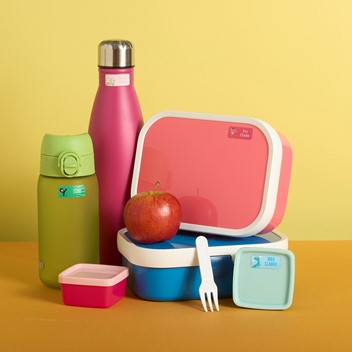
Starting ‘big’ school is a huge milestone. For many children, it means new friends, new routines, tiny chairs, enormous book bags and unexpected responsibilities. Remembering which table they will be sat at, learning the name of their teacher and classmates, and not forgetting to bring home their brand new, sparkly school jumper.
For parents, it means forms, labels, uniform lists, emotional meltdowns, and the realisation that a four-year-old can misplace a water bottle within seven minutes of entering a building.
If your child is starting Reception this September, you may already be thinking about school shoes, PE kits and whether five polo shirts is enough. Spoiler: it likely is, until one gets used as a painting apron, one lives permanently at the bottom of the school bag, and one disappears into the mysterious blackhole known as “lost property”.
But alongside the practical shopping list, there is another skill children need before starting school: learning to recognise, look after and bring home their own personal belongings.
Reception Is a Big Step — For Everyone
Starting school is not just about learning letters and numbers. It is also about independence.
Children are expected to hang up coats, put book bags in the right place, find their lunchbox, change for PE, keep track of jumpers and recognise their own things in a sea of identical navy cardigans.
That is a lot for a four-year-old whose current filing system may involve placing one sock in the toy box and the other behind the sofa.
Recent school readiness research has highlighted just how many children are arriving in Reception still developing basic independence skills, from following simple instructions to managing everyday routines. So, something as seemingly trivial as labelling a jumper can actually become part of a bigger habit: helping children understand, “This is mine, and I need to look after it.”
The Hidden Cost of Lost Property
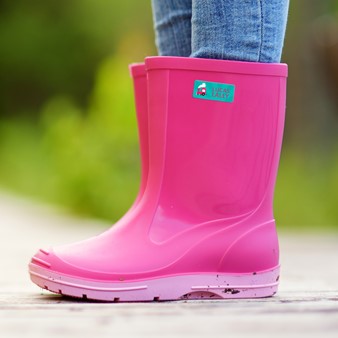
School uniform is already a significant expense for families. Research from Nationwide in 2025 reveals that parents are expecting to spend around £329 on back-to-school items alone – but what if you’re starting from scratch? When you consider the cost of getting the ‘big school starter pack’ it’s potentially considerably more. By the time parents have bought uniform, PE kit, school shoes, trainers, a book bag, lunchbox and water bottle, the cost of preparing a child for Reception can easily exceed £400 before they've even stepped into a classroom.
And that is before anything goes missing.
A jumper left on a peg. A cardigan abandoned after lunchtime. A PE top that never returns from the changing room. A water bottle that appears to have joined a travelling circus.
Individually, these things may not seem too costly. But over a school year, replacing lost items can quickly add up, especially for families with more than one child and especially when the same item can go missing multiple times (ask any parent of a primary-school-age child and they’ll tell you they’ve considered taking out stocks in various water bottle companies!)
The government’s new school uniform rules, due to come into effect from September 2026, are designed to reduce costs by limiting compulsory branded items. That is welcome news for parents. But even cheaper, unbranded uniform still becomes expensive if you have to buy it twice.
Start the Habit Before September
One of the simplest things parents can do before the first day of school is help children practise recognising their belongings.
That might mean:
* letting them choose their own lunchbox or water bottle
* showing them where their name is written
* practising packing and unpacking their school bag
* asking them to spot their coat, shoes or jumper
* start getting into the habit of preparing the morning after the night before
* making tidying away part of the daily routine
It doesn’t need to feel like a formal lesson. In fact, the more playful it is, the better.
“Can you find your jumper?”
“Where does your water bottle live?”
“Which label has your dinosaur on it?”
“Is this your cardigan or has mummy completely lost the plot?”
Small, repeated moments like this help children build confidence before the big day arrives.
Why Personalisation Helps
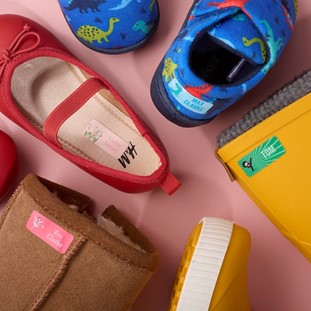
Children are far more likely to notice something when it feels like theirs. A plain jumper is just another jumper. A jumper with their name and favourite dinosaur or flower on it suddenly becomes much more interesting.
That is where personalised name labels can be really useful.
Tiger Tags, founded by mother-and-son team Sonja and Joe Adams, was created to make labelling school belongings simple for busy families living fast-paced lives. Their labels include iron-ons for clothing and stick-ons for lunchboxes, bottles, bags, books and other school essentials.
They are designed to survive the realities of family life, including washing machines, tumble dryers, dishwashers and whatever happens at nursery between snack time and pick-up.
Sonja Adams, co-founder of Tiger Tags and mum of three boys, says:
“As a parent, you quickly realise that children do not lose things because they are careless. They lose things because they are busy, excited and still learning. Labelling gives them a simple visual cue that says, ‘This belongs to me.’”
Joe Adams adds:
“We wanted Tiger Tags to feel practical for parents but fun for children. If a child helps choose the colour, font or icon, they feel involved. That sense of ownership can make a real difference.”
A small label with a big job – personalised name labels help young children develop their identity, take responsibility for their own belongings and create a sense of pride in something that is theirs.
A School-Ready Skill That Saves Parents Money
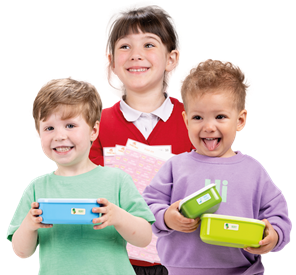
For parents of nursery and preschool-aged children, the run-up to school is the perfect time to start building these habits.
Before September, children can practise:
* recognising their own name
* labelling and identifying their own belongings
* putting items back in the same place (a KEY skill!)
* checking they have their coat, bag and bottle
* understanding that school things need to come home again
Will this guarantee that every jumper returns? Absolutely not. Four-year-olds remain delightfully unpredictable.
But it does give them a better chance.
And when families are already spending hundreds of pounds on school uniform, anything that helps avoid unnecessary replacements is worth considering.
Sometimes saving money is not about finding the cheapest jumper. It is about making sure the one you bought on Sunday doesn’t vanish by Tuesday.