Raising Young Children in the UK: How LeapHope Supports NRI and Expat Families
Have you ever found yourself on a video call with your mum, asking what to do because your toddler won't eat, sleep or stop crying? Or wished your parents lived just around the corner so you could have an hour to yourself?
Raising children in the UK when you've grown up somewhere else can be quite an experience. You're learning about a different education system, adapting to new ways of parenting and trying to keep your family traditions alive.
But what happens when your child refuses to go to nursery, struggles to make friends or starts behaving in ways you don't understand? And where do you turn when you need professional advice?
Finding Psychological Support as an NRI or Expat Parent
For many families living abroad, finding a psychologist who understands their language, upbringing and family circumstances is an important consideration.
Structured online psychology platforms such as LeapHope offer NRI, South Asian and expat families in the UK access to senior child psychologists specialising in emotional, behavioural, developmental and educational difficulties.
Whether your child was born in Britain or has recently moved here, understanding their individual experiences is an important part of providing the right psychological support.
When Your Child Struggles With Nursery or School
Imagine being three years old and spending the morning somewhere where you don't understand everything people are saying.
Starting nursery or Reception can be particularly challenging for children adjusting to a different language, unfamiliar routines and new social expectations.
Your child might happily chat away at home but barely say a word in the classroom. They may complain of a tummy ache every morning, become upset when it's time to leave or struggle to take part in group activities.
Some of the difficulties parents may encounter during the early years include:
* Separation anxiety and persistent school refusal.
* Difficulty concentrating, remembering or following instructions.
* Problems developing early reading, writing and learning skills.
* Hyperactivity, impulsivity and disruptive behaviour.
* Difficulty making friends or participating in group activities.
* Fear of making mistakes and low self-confidence.
* Bullying, teasing or social exclusion.
* Selective mutism and anxiety in unfamiliar settings.
For children from minority ethnic backgrounds, comments about their name, accent, appearance or cultural practices can also affect their willingness to participate.
Keep in touch with your child's teacher, practise everyday routines through play and avoid comparing their progress with that of classmates.
When difficulties persist, an experienced child psychologist can help explore the underlying emotional, behavioural or developmental factors and suggest strategies that parents and teachers can use.
Should You Speak Your Home Language or English?
You might speak Hindi, Punjabi, Bengali, Urdu, Tamil or Gujarati at home, whilst your child hears English everywhere else.
Naturally, you may wonder whether switching to English would help them do better at nursery or school.
There is no need to give up your home language. Learning more than one language does not itself cause a speech or language disorder.
Read stories, sing familiar songs and chat to your child in the language you feel most comfortable using. Don't worry if they occasionally mix words from different languages.
However, persistent difficulties understanding speech or expressing themselves across the languages they use deserve professional attention. Identifying communication or developmental concerns early can help children receive appropriate support.
Parenting Between Two Cultures
Your little one might be making Christmas decorations at nursery one week and helping you prepare for Diwali, Eid or Vaisakhi another.
They might love beans on toast just as much as their grandmother's homemade parathas.
Growing up with different cultures can be a lovely experience, although it sometimes leaves parents wondering how best to approach discipline, independence and education.
Your relatives may wonder why your four-year-old isn't learning to read yet, whilst their nursery practitioner encourages learning through play.
You don't have to choose between the values you grew up with and the parenting approaches you encounter in the UK.
Take toddler tantrums, for example. If your child throws a toy because they're frustrated, you might say:
“I know you're cross because it's time to stop playing, but we don't throw our toys.”
You're teaching appropriate behaviour whilst helping your child understand their feelings.
Talk to your partner about the expectations you have for your children, particularly around discipline, academic achievement and independence. Agreeing on an approach together can prevent unnecessary confusion and conflict at home.
Looking After Your Own Mental Health
Perhaps you're unwell, your partner is at work and your toddler has decided that today is the day they won't nap.
For many NRI and expat parents, there isn't a grandparent or relative nearby who can simply pop over and lend a hand.
Between nursery fees, work commitments, household responsibilities and worries about family overseas, your own wellbeing can easily take a back seat.
Homesickness, loneliness, parental burnout, anxiety and relationship difficulties are all concerns worth taking seriously. New mothers may also experience postnatal depression, anxiety or difficulties adjusting to motherhood.
Try getting involved in local baby and toddler groups, library rhyme-time sessions or community activities. Having someone nearby to share your experiences with can make a difficult week feel more manageable.
If you and your partner are regularly arguing about childcare, money or household responsibilities, consider professional couples or family counselling. Looking after your emotional wellbeing is an important part of creating a secure environment for your children.
Understanding Mental Health and Developmental Conditions in Young Children
We often associate mental health conditions with teenagers and adults, but significant psychological and developmental difficulties can emerge much earlier.
Persistent aggression, extreme fears or unusual behavioural patterns shouldn't automatically be dismissed as something your child will grow out of.
Parents may need specialist psychological support for concerns such as:
* Anxiety disorders, phobias and excessive fears.
* ADHD-related attention and impulse-control difficulties.
* Autism-related developmental, sensory and social communication needs.
* Severe tantrums, aggression and oppositional behaviour.
* Obsessive fears and compulsive behaviours associated with OCD.
* Childhood trauma, grief and attachment difficulties.
* Persistent sadness and emotional withdrawal.
* Sleep disturbances and age-inappropriate toileting difficulties.
* Problematic screen use affecting everyday activities.
* Sibling rivalry and emotional difficulties following parental separation.
* Developmental delays or loss of previously acquired skills.
These concerns can affect a child's ability to learn, communicate, play and form relationships.
When it is difficult to understand what's behind your child's behaviour, an appropriate psychological assessment can help clarify their emotional, behavioural, cognitive and developmental needs.
A psychologist can advise which assessments are suitable for your child's age (3-18+), whether they can be conducted remotely and what interventions may be beneficial.
Why LeapHope Is Worth Exploring for Child Psychology Support in the UK
For Indian, Pakistani, Bangladeshi, Sri Lankan and other expatriate families, finding a professional who combines clinical expertise with cultural understanding can make psychological consultations more meaningful.
LeapHope brings together senior child psychologists, clinical psychologists, MPhil and PhD-qualified professionals, RCI-registered practitioners and specialists with extensive experience and advanced training in psychological therapies.
The platform offers support for both everyday childhood difficulties and more complex mental health, behavioural, developmental and school-related concerns.
Specialist therapies for children
Depending on their expertise and the child's needs, psychologists use approaches including cognitive behavioural therapy (CBT), behavioural interventions, play-based therapy, social skills training, family therapy, trauma-informed interventions and structured parent training.
Treatment is adapted to the child's age, developmental abilities and psychological needs. A preschool child experiencing severe anxiety, for instance, may require a different therapeutic approach from a child struggling with impulsivity, sensory difficulties or the effects of trauma.
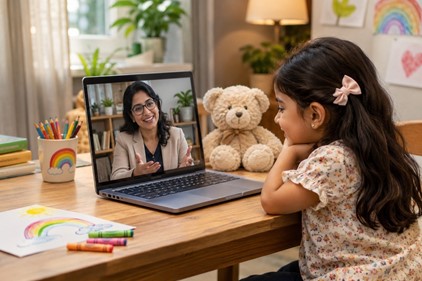
How does a psychologist work with a child over a video call?
It's a reasonable question, particularly if your three-year-old rarely sits still long enough to finish a meal.
Experienced psychologists trained in online child interventions understand that working with young children requires different techniques from adult talking therapy.
Sessions may involve guided play, drawing, storytelling, interactive activities and behavioural observations using familiar toys and materials available at home.
The psychologist can also observe how your child communicates, responds to instructions and interacts with family members.
Depending on the child's needs, appointments may include:
* Individual child therapy sessions.
* Parent-only psychological consultations.
* Combined child-parent sessions.
* Guided behavioural and developmental activities.
* Follow-up sessions to evaluate progress and adjust interventions.
This allows parents to actively participate in their child's psychological care and continue therapeutic activities between appointments.
Multilingual counselling and cultural understanding
Families can explore psychologists offering consultations in English, Hindi and other South Asian languages, depending on the practitioner.
This is particularly useful when parents feel more comfortable discussing sensitive concerns in their first language, whilst their children prefer communicating in English.
Professionals familiar with South Asian family dynamics can also take cultural expectations, parenting practices and intergenerational relationships into consideration when planning interventions.
Choose your own psychologist
Parents can explore LeapHope's network of experienced psychologists and review their qualifications, clinical experience, specialist training, languages and session fees before booking.
Flexible appointments suited to UK schedules and the option to continue with the same psychologist make ongoing support more convenient. Families can book private consultations directly without requiring a GP referral.
LeapHope also offers individual, marriage, parenting and family counselling, providing psychological support for wider concerns affecting the household.
Where formal diagnoses, medical treatment or specialist in-person assessments are needed, an initial consultation can help families understand the appropriate next steps.
Giving Your Child the Support They Need
Raising children away from the country you grew up in comes with its own experiences, responsibilities and rewards.
Enjoy the different traditions your child is discovering, give them opportunities to express themselves and pay attention when something doesn't seem quite right.
Whether you're worried about behaviour at home, difficulties at school or a more complex psychological concern, seeking professional advice early can help you make informed decisions about your child's wellbeing and development.