Raising a Happy Eater
How to help your child build a healthy relationship with food, by Alicia Eaton.
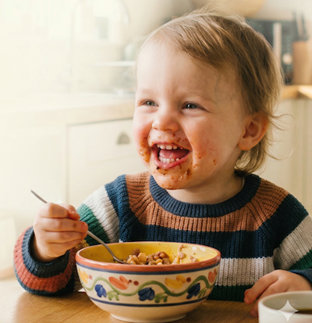
If you are parenting a child under five, you probably spend a surprising amount of time thinking about food. What to buy, what to cook, whether your child will eat it – and if they don’t, what that might mean. It can feel exhausting.
But beyond nutrients and portion sizes, something far more important is happening during these early years. Your child is forming a relationship with food – one that will likely stay with them for life. Many of us can remember episodes from our own childhood that still shape the way we eat as adults.
Long before children understand ideas like healthy eating, they absorb the atmosphere around meals. They notice your tone of voice, how rushed or relaxed things feel, and whether food becomes a source of tension or enjoyment.
The reassuring part is that raising a happy eater is rarely about getting food exactly right. It is far more about helping children feel comfortable and unpressured, alongside a steady set of routines and habits. That is something most parents can offer, even on busy days.
Today’s food world is different
Parents today are raising children in a very different food environment from the one many of us grew up in. Supermarkets offer endless choice, cafés are everywhere and food delivery apps mean everyone can eat something different at the touch of a button.
Alongside this, there is a constant cultural conversation about sugar, ultra-processed foods, allergies and weight. Even very young children pick up on this emotional backdrop.
They may not understand the language adults use, but they understand when something feels not quite right. They notice when food becomes a source of worry and can sense when adults feel conflicted about eating.
One of the most helpful things we can do is simplify the emotional atmosphere around food and avoid using labels such as ‘good’ and ‘bad’.
Appetite is allowed to change
One of the most common concerns I hear from parents is how unpredictable their child’s appetite can seem. A toddler who eats enthusiastically one day might barely touch their food the next. They may love a food for weeks and then suddenly refuse it.
This fluctuation is normal. Young children’s appetites vary depending on growth, sleep, activity and emotional state. Responding calmly to these phases helps far more than reacting with anxiety.
When children are coaxed or persuaded to eat more than they want, they begin to focus on adult expectations rather than their own internal cues. Over time, it becomes harder for them to recognise hunger and fullness.
Falling out of touch with your body’s natural hunger signals is easily done and can lead to a child that pesters you for endless snacks, even when they’re not genuinely hungry. This is not out of greediness, but more a response to tiredness, boredom or frustration.
So a happy eater is not a child who clears their plate every time, but one who gradually learns to recognise hunger, satisfaction and even occasional lack of appetite as normal.
Avoid turning food into a reward or a battleground
Many of us fall into the habit of using phrases that can have unintended consequences:
“Just three more bites.”
“You can have pudding if you finish.”
“Be good and eat your vegetables.”
They come from a place of care - we want our children to be nourished. But over time, these messages can create associations we did not intend. Food becomes something to earn or negotiate over. If dessert is framed as a prize and vegetables as an obstacle, we unintentionally elevate one and downgrade the other.
Keeping language neutral can make a big difference. Some families find it helpful to talk about “everyday foods” and “sometimes foods,” rather than good and bad foods. This keeps the tone practical and removes moral weight from eating.
The Power of Routine
Children feel safer when life is predictable, and eating is no exception. Regular mealtimes and planned snack times create a rhythm that reassures children food is coming again.
This alone should reduce frequent requests for snacks. Children who graze throughout the day often do not experience genuine hunger, which can make them seem fussy at mealtimes. Allowing gentle hunger to build helps them come to the table ready to eat and more open to new foods.
In France, children are taught that feelings of hunger are to be welcomed, for it means that you’ll enjoy the next meal even more. So a little bit of patience is no bad thing.
Sensory Preferences Matter
Some children may appear fussy, but their senses are still developing and it’s not uncommon for them to experience sensory overwhelm. Strong reactions to smells, colours, textures and how food feels in the mouth are not unusual.
One child may prefer crunchy textures, another may dislike foods that are mixed together, while some need to explore food with their fingers before feeling ready to taste it.
When we view these reactions as sensory preferences rather than stubbornness, the mood around mealtimes can soften. Instead of asking, “How do I make my child eat this?”, we can ask, “How can I present this in a way that feels manageable?”
Small adjustments – separating foods, changing temperature or offering a familiar dip – can make a surprising difference.
Simple ways to help raise a happy eater
* Keep the emotional atmosphere calm
Children eat best when they feel safe rather than watched or evaluated. Aim for connection at the table rather than control.
* Trust fluctuating appetites
Toddlers rarely eat the same amount each day. Calm responses help them stay connected to hunger and fullness cues.
* Avoid turning food into leverage
Using dessert as a reward or vegetables as a hurdle can create associations that last beyond childhood.
* Create gentle structure around meals and snacks
A predictable rhythm reassures children that food is coming and allows appetite to build naturally.
* Respect sensory preferences
Texture, temperature and presentation matter more than many adults realise.
* Model the relationship with food you hope they develop
Children learn more from what they observe than from what they are told.
* Focus on the long game
No single meal shapes your child’s eating habits. It is the small, repeated experiences over time that build curiosity and trust.
Early childhood is a powerful period for habit formation, but this does not mean parents have to get everything right. What matters most is the emotional pattern children experience repeatedly: calm meals, neutral language, recognition of internal hunger signals and a sense of connection at the table.
A happy eater is not a child who eats perfectly, but one who feels comfortable, curious and safe around food.

Alicia Eaton is a Harley Street–based behaviour change psychotherapist with over 20 years’ experience working with parents, children and teenagers. She’s the author of Mind How Your Kids Eat, which explores how everyday habits and language shape children’s long-term relationship with food.