Nurturing the Tiny Author: Fun and Educational Activities to Encourage Early Writing Skills
The journey toward literacy, from the first clumsy crayon scribble to fluent, expressive handwriting, is one of the most exciting developmental paths a child takes. For parents and caregivers, it can be tempting to rush straight to practicing the alphabet, but true writing readiness starts long before a child ever attempts a letter. It begins with play, movement, and strengthening the tiny, complex muscles in their hands.
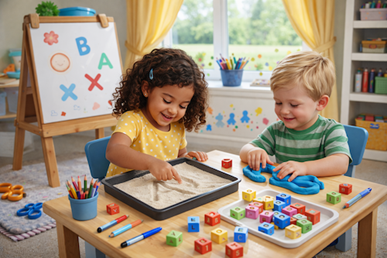
Developing these pre-writing skills during the toddler and preschool years is less about formal instruction and more about creating an environment rich with engaging, purposeful activities. When children are having fun, they build the essential physical and cognitive foundations necessary for writing mastery without realising they are even working. This holistic, play-based approach ensures that when they finally pick up a pencil, the physical act of writing feels natural, not frustrating.
1. The Critical Foundation: Building Fine Motor Muscle
Handwriting is a fine motor skill, meaning it relies on the coordinated control of the small muscles of the hands and fingers. Just as a runner needs strong leg muscles, a future writer needs dexterity and strength in their hands. The period between ages three and six is particularly critical for establishing these muscle patterns and the necessary "pencil grasp," making it the ideal time to focus on strengthening activities.
The Essential Pillars of Hand Strength:
* Pincer Grip Refinement: The ability to pinch objects using the thumb and index finger is the precursor to holding a pencil in the desired dynamic tripod grasp.
* Separation of the Hand: This refers to the ability to use the thumb, index, and middle fingers (the ‘busy fingers’ that hold the tool) independently from the ring and pinky fingers (the ‘sleeping fingers’ that stabilise the hand).
Actionable Fine Motor Play Ideas:
* Playdough and Clay: The ultimate hand-strengthener. Activities like rolling playdough into long "snakes," pinching off small pieces to make “cookies,” or pressing cookie cutters requires constant squeezing, squishing, and flattening. This builds deep hand arches and muscle endurance.
* Tongs and Tweezers Games: Use large kitchen tongs, sugar cube tongs, or child-safe tweezers to move small items like pom-poms, cotton balls, or beads from one container to another. This specifically isolates the pincer grip and helps the wrist stabilise.
* Paper Tearing and Cutting: Tearing scrap paper into small pieces (great for collage materials!) builds fantastic two-handed coordination and hand strength. Once they are ready for tools, introduce child-safe scissors, starting with simple snips on thick card stock and progressing to cutting along straight lines.
* Water Squeezing: In the tub or at a water table, provide large sponges or turkey basters. Squeezing a sponge to release water or manipulating a baster to suck up and squirt liquid is a highly effective, low-effort way to build powerful hand muscles.
A child’s ability to coordinate their hands and fingers is directly linked to their confidence in school tasks. As The OT Toolbox, a resource created by occupational therapists notes, helping a child build fine motor skills at home through practical daily tasks, like stirring, zipping, and fastening clothing, prepares them for more advanced skills, from writing to using a computer mouse.
2. From Abstract Play to Pre-Writing Shapes
Once the muscles are primed, the next stage involves understanding the directional strokes that compose all letters. Before tackling the complex curvature of an 'S' or the tight angles of a 'K,' a child needs to master pre-writing shapes. These include vertical lines (|), horizontal lines (—), circles (O), and crosses (+). This is where sensory exploration shines.
Sensory Writing Trays: Sensory trays transform the mundane act of marking into an engaging tactile experience. Fill a shallow baking pan with a thin layer of material like sand, salt, rice, cornmeal, or even coloured sugar. A child can then use their index finger, a paintbrush handle, or a small stick to draw the shapes. The immediate feedback of the texture moving and the clear line appearing is highly satisfying.
The Power of Vertical Surfaces: Encouraging marking on vertical surfaces such as an easel, a chalkboard secured to the wall, or simply taping a large sheet of paper to a refrigerator, has two often-overlooked benefits. First, it strengthens shoulder and elbow stability, which provides the necessary control for the hand movements later on. Second, it naturally encourages a better wrist extension, which is key to developing a proper pencil grasp.
Activities in this stage are paving the way for eventual academic rigour. While the focus now is on fundamental exploration and shape recognition, it is important to remember that this foundation sets the stage for success throughout their academic career. Years from now, when faced with demanding high-stakes assignments, such as navigating complex research and articulating arguments in university-level papers, some students will find themselves seeking professional assistance with difficult tasks like courseworks by Ivory Research. The early work of connecting motion with mark-making, however, remains the irreplaceable bedrock of all future academic endeavours.
3. Emergent Writing: Recognising Letters and Their Meaning
The transition from drawing shapes to forming letters is often referred to as the "emergent" stage of writing. Typically occurring between the ages of two and four, this stage is characterised by children starting to realise that the squiggles adults make are actually symbols - letters, that carry meaning.
During this stage, you might see them mix drawings with random letters, or try to use long strings of letters, often capitals, that hold a message only they understand. This is a cognitive breakthrough, as they are making the connection between the spoken word and the printed symbol.
Fostering Letter Recognition and Early Attempts:
* Tactile Letter Fun: Move beyond pencils and paper by making letter practice tangible. Use pipe cleaners to bend into letter shapes, build letters with small Lego bricks, or have them form the first letter of their name using playdough.
* Shaving Cream or Finger Paint: Spread a thin layer of shaving cream or washable finger paint directly onto a table or high chair tray. This provides minimal friction, allowing for large, fluid movements as they practice drawing their initials or simple lines. This sensory play is incredibly beneficial, as the Khan Academy Kids educational app frequently highlights the importance of playful learning experiences in early literacy development.
* The Power of Their Name: A child's name is the most meaningful word they will ever learn to write. Provide a card with their name clearly written in capital letters and encourage them to trace it, copy it, or stamp it using alphabet stamps. Start with capital letters, as their form is made up of simpler, straight lines (vertical, horizontal, diagonal) that are developmentally easier to master than lowercase curves.
* Writing in Context: Encourage your child to write in scenarios that are meaningful to them. Set up a "restaurant" and have them scribble the menu, create a "post office" where they write (or draw) letters to family members, or ask them to label their drawings with the first letter of the subject. These activities give writing a real-world purpose.
4. From Phonetic Spelling to Fluent Expression
As children progress toward the preschool and early school-age years (four to seven), their writing enters the transitional and fluent stages. This is when they begin to connect the sounds they hear (phonemes) with the letters they know. The result is often "invented spelling"—spelling words exactly as they sound, such as "LUV" for love or "KAT" for cat. It is essential to celebrate these attempts, as they demonstrate a sophisticated understanding of sound-to-symbol correspondence.
Supporting the Developing Writer:
* Dictation and Co-Creation: If your child has a great story idea but their writing hand can’t keep up, write the story down for them. This practice, known as dictation, allows them to experience the narrative flow and see correct letter formation without the frustration of labouring over every symbol. For example, Reading Eggs, an online reading program often suggests that using dictation helps bridge the gap between a child's complex ideas and their physical writing ability.
* Short, Chunky Writing Tools: While the fine motor skills are still maturing, ensure your child is using writing tools that are comfortable. Short crayons (or “crayon rocks”), chalk, or thick triangular markers are often easier to control than long, skinny pencils. Shorter tools prevent them from wrapping their whole hand around the barrel, naturally encouraging the desired three-finger grasp.
* Reading and Print Awareness: Reading aloud remains one of the most vital ways to support writing. When a child sees words on a page, they observe the rules of print: letters move from left to right, words are separated by spaces, and sentences end with punctuation. Point out these concepts naturally during story time.
The Most Important Rule: Keep It Joyful
The single most effective strategy for encouraging early writing is to remove all pressure and keep the experience joyful. The goal is not perfection or speed, but engagement. When children view mark-making and writing as a source of fun, creativity, and connection, they are internally motivated to practice the very skills they need.
Create a cozy, accessible writing corner stocked with various materials, not just paper and pencils, but stickers, coloured tape, notebooks, stamps, and different types of pens. Celebrate the process, not just the finished product. If they draw a messy, unintelligible scribble but tell you it's a map to the moon, praise the storytelling and the effort. By focusing on the playful exploration today, we equip them with the confidence and physical ability to become articulate, fluent writers tomorrow.