How to Store a Baby Jumperoo When Not in Use
Baby Jumperoos can be a brilliant way to keep little ones entertained during their early developmental stages. However, once your baby outgrows their activity centre, you're often left with a surprisingly bulky piece of equipment taking up valuable space in your home.
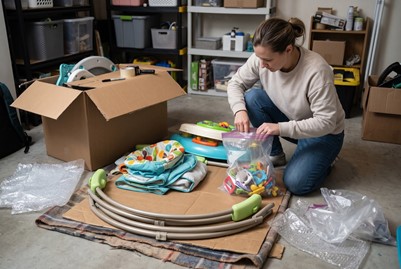
If you're planning to have another child, selling or donating your Jumperoo might seem premature. After all, keeping it for a younger sibling could save you money in the future.
The challenge is finding somewhere suitable to store it without damaging the frame, fabric seat or electronic components.
Fortunately, with a little preparation, you can keep your baby's Jumperoo clean, protected and organised until it's needed again.
In this guide, we'll explain how to store a baby Jumperoo when not in use, including cleaning, dismantling, preventing mould and choosing the best storage location.
Key Takeaways
* Clean the Jumperoo thoroughly before putting it into storage.
* Remove and wash detachable fabric components according to the manufacturer's instructions.
* Dismantle the activity centre only if the manufacturer permits it.
* Remove batteries from electronic toys to prevent leakage and corrosion.
* Make sure every component is completely dry before packing it away.
* Keep small parts and accessories together in labelled bags.
* Choose a clean, dry storage environment away from moisture and extreme temperatures.
* Inspect the Jumperoo carefully before allowing another baby to use it.
Can You Store a Baby Jumperoo for Another Child?
Yes, you can generally keep a baby Jumperoo for another child, provided it remains in good condition and is stored correctly.
Many parents save baby equipment between children, particularly larger items such as activity centres, high chairs, travel cots and pushchairs.
A Jumperoo can be especially worthwhile keeping because it's typically used for a relatively short period before a baby outgrows it.
However, long-term storage requires more than simply placing the activity centre in a cupboard or garage.
Dust, moisture, temperature changes and improper stacking can damage its materials.
Before deciding to reuse it, you'll also need to confirm that the model hasn't been recalled, all its parts remain intact and it still meets the manufacturer's safety requirements.
How to Store a Baby Jumperoo: 10 Essential Tips
1. Clean the Jumperoo Before Storing It
Even if your baby's activity centre looks clean, it's worth giving it a thorough clean before packing it away.
Food residue, dribble, dust and sticky fingerprints can accumulate on the seat, toys and frame.
If left for several months, these residues may cause unpleasant smells or make cleaning more difficult later.
Start by removing any detachable toys and accessories according to the manufacturer's instructions.
Use a soft cloth and an appropriate cleaning solution to wipe down the plastic surfaces.
Pay particular attention to:
* The seat frame and surrounding plastic surfaces
* Toy attachments and activity panels
* Areas around buttons and switches
* Undersides of removable components
* Joints and accessible crevices
* The base and supporting frame
Avoid soaking electronic components or allowing liquid to enter battery compartments.
Once everything has been cleaned, allow the surfaces to dry completely.
2. Remove and Wash the Fabric Seat
The fabric seat is one of the most important components to clean before storage.
During everyday use, it can collect crumbs, dribble and other residues.
Many Jumperoo models have removable fabric seats, although cleaning instructions vary.
If your model has a machine-washable seat, follow the manufacturer's recommended washing temperature and cycle.
Avoid using bleach or harsh cleaning products unless the care instructions specifically permit them.
After washing, allow the fabric to dry completely.
Do not store the seat while it is even slightly damp, as trapped moisture may encourage mould and mildew.
If the seat cannot be removed, clean it using the method recommended by the manufacturer.
3. Remove the Batteries From Electronic Toys
Many baby Jumperoos include electronic toys that play music, make sounds or produce flashing lights.
If your model uses replaceable batteries, remove them before long-term storage.
Batteries left inside unused equipment can leak over time, potentially damaging the contacts and electronic components.
After removing the batteries, check the compartment for signs of corrosion or damage.
Close the battery compartment securely and store the activity centre without loose batteries inside it.
If the toy uses a rechargeable battery that cannot be removed, follow the manufacturer's storage guidance.
4. Dismantle the Jumperoo If Possible
One of the biggest challenges with storing a Jumperoo is its size.
Many models have a wide circular frame, supporting legs and a central seat.
Fortunately, some activity centres can be partially dismantled, making them easier to store.
Check your instruction manual to see which components can safely be removed.
Depending on the model, these may include:
* Supporting legs
* Seat assemblies
* Removable toys
* Activity panels
* Frame sections
Never force components apart or attempt to dismantle parts that aren't designed to be removed.
Avoid modifying springs, suspension straps or structural connections.
If you no longer have the instruction manual, check the manufacturer's website for the correct model-specific instructions.
5. Keep Screws and Small Parts Together
If your Jumperoo can be dismantled, keeping all its components organised will make reassembly much easier.
Place any manufacturer-approved removable fittings in a small, labelled bag.
Make sure the bag is securely closed and stored with the activity centre, away from children's reach.
You could label it:
Baby Jumperoo – Assembly Parts
If you're storing several pieces of baby equipment, consider keeping each item's components in separate bags.
Taking photographs during dismantling can also help you remember how everything fits together.
However, always use the manufacturer's instructions when reassembling the equipment rather than relying solely on photographs.
6. Protect the Frame From Scratches and Damage
Jumperoos often contain a combination of plastic, metal and fabric components.
Although these materials are designed for regular use, they can still become damaged during storage.
Avoid placing heavy boxes or furniture directly on top of the frame.
Excessive pressure may bend supporting components or crack plastic fittings.
If you've dismantled the activity centre, consider wrapping individual sections in clean, breathable protective material.
Keep sharp objects away from the fabric seat and suspension components.
You should also avoid storing the equipment where it might be knocked over or crushed.
7. Make Sure Everything Is Completely Dry
Moisture is one of the biggest risks when storing baby equipment.
If the seat, frame or toy attachments are packed away while damp, mould and unpleasant smells may develop.
Before storage, check that:
* The fabric seat is completely dry.
* All plastic surfaces have dried after cleaning.
* No moisture remains around joints.
* Battery compartments are clean and dry.
* Any protective covers are dry.
Allow sufficient drying time before packing everything together.
If you notice condensation or dampness in your chosen storage location, consider moving the equipment somewhere more suitable.
8. Choose the Right Storage Location
A Jumperoo can take up considerable floor space, even when it's no longer being used.
This can be particularly frustrating for parents who are keeping baby equipment for a younger sibling.
If you're trying to free up room at home without permanently getting rid of belongings, it's worth considering how rarely used equipment can be organised or stored elsewhere until it's needed again.
Suitable storage locations may include:
* A dry spare bedroom
* An indoor storage cupboard
* A clean, dry utility room
* A suitable under-stairs cupboard
* A self-storage unit with appropriate conditions
Avoid areas with persistent dampness, water leaks or extreme temperature fluctuations.
The best location is somewhere the equipment can remain protected without obstructing everyday living space.
9. Use a Suitable Protective Cover
A protective cover can help prevent dust from accumulating on your baby's Jumperoo during storage.
If you still have the original packaging, it may be useful for keeping dismantled components together.
However, make sure everything is completely dry before packing it away.
Alternatively, use a clean, suitable protective covering that doesn't place pressure on delicate components.
Avoid wrapping damp fabric or electronics tightly in plastic.
If storing the Jumperoo for an extended period, check its condition occasionally.
10. Inspect the Jumperoo Before Using It Again
Before allowing another baby to use the Jumperoo, carry out a careful inspection.
Check the frame, seat, suspension components and toys for signs of damage.
Look for:
* Cracked plastic
* Bent or damaged frame sections
* Frayed straps or suspension components
* Loose connections
* Torn seat fabric
* Missing fittings
* Corrosion around battery contacts
* Damaged toy attachments
Reassemble the activity centre according to the manufacturer's instructions.
Make sure all components are securely fitted and the equipment is stable.
Check the manufacturer's current age, weight and developmental restrictions before use.
Jumperoos should only be used when a baby meets the specific model's requirements, including any head-control or developmental guidance.
Always supervise your baby and follow the manufacturer's usage instructions.
Where Is the Best Place to Store a Baby Jumperoo?
The best storage location depends on the size of your home, how long you intend to keep the equipment and the conditions of the available space.
Storage location - Advantages - Potential drawbacks
Spare bedroom - Generally convenient and protected - Takes up living space
Under-stairs cupboard - Keeps equipment out of sight - Limited room for larger frames
Loft - Frees up space in the home - Temperature fluctuations and condensation
Garage - Useful for bulky equipment - Dampness, pests and temperature changes
Shed - Separates equipment from living areas - Often unsuitable due to mouisture
Self-storage unit - Keeps bulky equipment outside the home - Additional cost and varying storage conditions
For long-term storage, a clean, dry environment is generally preferable to an uninsulated shed or damp garage.
Can You Store a Baby Jumperoo in the Garage?
You can store a Jumperoo in a garage if the conditions are suitable, but it isn't always the best option.
Garages can experience dampness, condensation and considerable temperature changes.
Over time, these conditions may affect fabric, metal and electronic components.
If you're considering garage storage, make sure the space is dry and free from leaks.
Keep the activity centre off damp surfaces and away from chemicals, tools and heavy objects.
A protective cover may help reduce dust, but it won't prevent damage caused by persistent moisture.
If your garage regularly experiences condensation or dampness, an indoor storage location would be preferable.
Can You Store a Jumperoo in the Loft?
A loft can be useful for storing bulky baby equipment, particularly if you have limited cupboard space.
However, loft conditions vary considerably.
Some lofts become extremely hot during summer and cold during winter.
Condensation and dust can also be problems.
Before placing a Jumperoo in the loft, check for signs of moisture, roof leaks and pests.
If possible, dismantle the equipment according to the manufacturer's instructions and keep the components protected.
Avoid placing heavy items on top of the frame.
You should also consider whether the loft can safely accommodate the weight of the stored items and whether the equipment can be moved through the loft opening without damage.
How Do You Stop a Jumperoo From Going Mouldy?
Preventing mould starts with thoroughly cleaning and drying the equipment.
Fabric seats are particularly vulnerable when stored in damp environments.
To reduce the risk of mould:
1. Wash the fabric seat according to its care label.
2. Allow the seat to dry completely.
3. Wipe down the frame and plastic components.
4. Avoid damp garages and sheds.
5. Use a clean protective covering.
6. Inspect the storage environment periodically.
If mould develops, consult the manufacturer's cleaning guidance.
Where mould affects materials that cannot be thoroughly cleaned or components have deteriorated, replacing the affected equipment may be necessary.
Never allow a baby to use an activity centre with unresolved mould or structural damage.
Should You Keep a Jumperoo for Your Next Baby?
Keeping a Jumperoo for another child can make financial sense, especially if the equipment is relatively new and remains in excellent condition.
However, there are several things to consider.
How Soon Might You Need It Again?
If you're planning another baby in the near future, keeping the activity centre may be worthwhile.
If you don't expect to need it for several years, consider whether the available storage space justifies holding on to it.
Is It Still in Good Condition?
Inspect the frame, seat and toys before deciding to store the equipment.
Damaged suspension components or structural fittings may make it unsuitable for future use.
Do You Have Somewhere Suitable to Store It?
A large Jumperoo can occupy a surprising amount of space.
If your home is already crowded with outgrown baby equipment, you may need to prioritise which items are worth keeping.
Is the Model Still Safe to Use?
Before reusing the Jumperoo, check for recalls and review the manufacturer's latest safety information.
Do not assume that equipment remains safe simply because it was stored carefully.
How Long Can You Keep a Baby Jumperoo in Storage?
There is no universal storage lifespan for every Jumperoo.
Its condition will depend on factors such as the materials, storage environment, previous use and manufacturer's recommendations.
Some equipment may remain suitable after a relatively long period in storage, while other items may deteriorate.
Plastic components can become damaged, fabric may develop mould and metal parts may corrode in unsuitable conditions.
If you're planning to keep a Jumperoo for several years, inspect it periodically and assess its safety carefully before reuse.
What Other Baby Equipment Is Worth Keeping Between Children?
Parents often find themselves deciding which baby items to keep and which to sell or donate.
Some items may be worth retaining if they remain safe, functional and in good condition.
Examples include:
* High chairs
* Travel cots
* Baby baths
* Pushchairs
* Activity centres
* Baby play mats
* Certain toys
* Suitable baby clothing
However, safety requirements vary between products.
For example, car seats, sleeping equipment and other safety-critical products require additional checks before reuse.
Consider the condition, age, storage requirements and manufacturer's guidance for each item.
Common Mistakes When Storing a Baby Jumperoo
Several avoidable mistakes can lead to damaged equipment.
Storing it without cleaning: Food residue and dirt can cause unpleasant smells and attract pests.
Leaving batteries inside: Batteries may leak and damage electronic toys.
Packing the seat while damp: Moisture can encourage mould and mildew.
Forcing the frame apart: Incorrect dismantling may damage structural components.
Losing small fittings: Missing parts can prevent safe reassembly.
Stacking heavy objects on top: Excessive weight may damage the frame.
Storing it in a damp shed: Poor conditions can affect fabric, metal and electronics.
Skipping safety checks: Equipment should always be inspected before being reused.
Frequently Asked Questions
Can you dismantle a baby Jumperoo for storage?
Some Jumperoo models can be partially dismantled, but others have components that should remain assembled. Always follow the manufacturer's instructions.
Can you store a Jumperoo for two years?
Potentially, yes. If the equipment is stored correctly and remains in good condition, it may be suitable for future use. Check for recalls and inspect all components before reusing it.
Should you remove the batteries before storing a Jumperoo?
Yes. Remove replaceable batteries before long-term storage to reduce the risk of leakage and corrosion.
Can you wash a Jumperoo seat?
Many models have removable, washable fabric seats. Check the care label and manufacturer's instructions for the correct cleaning method.
Can you keep a Jumperoo in the loft?
Yes, if the loft provides suitable conditions. Avoid excessive heat, condensation, dampness and placing heavy objects on top of the equipment.
How do you store a Jumperoo without the original box?
You can use a suitable protective cover and keep any removable parts together in labelled bags. Avoid compressing or damaging the frame.
Can a Jumperoo go mouldy in storage?
Yes. Damp fabric and poorly ventilated storage environments can encourage mould growth.
Is it safe to use an old Jumperoo?
It may be, provided the model has not been recalled, all components are in good condition and it meets the manufacturer's requirements. Never use equipment with damaged structural or suspension components.
Final Thoughts
A baby Jumperoo can be worth keeping for another child, but proper storage is essential to maintaining its condition.
Start by cleaning the activity centre thoroughly, removing replaceable batteries and allowing every component to dry completely.
If the manufacturer permits dismantling, carefully separate the components and keep all fittings together.
Choose a clean, dry storage location where the frame, fabric and electronic toys will be protected from moisture, excessive temperatures and accidental damage.
Most importantly, inspect the Jumperoo before using it again and follow the manufacturer's current safety instructions.
With a little preparation, you can keep bulky baby equipment organised and ready for the next stage of family life.