How to Plan a Seaside Break Around Nap Times and Dog Walks
A day at the beach with a toddler runs on a clock that isn’t yours. There’s a window in the morning when everything works, and a point in the afternoon when it all falls apart if nobody has slept. Add the family dog and you’ve got a second set of needs running alongside the first.
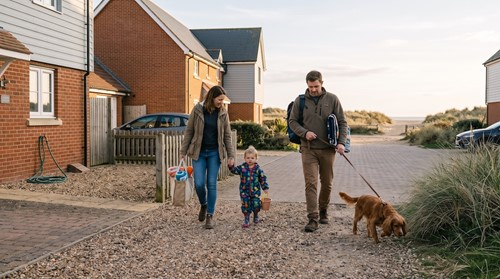
A seaside break with both is entirely doable. It just needs planning in a slightly different shape to the one most of us default to.
Stop Trying to do One Long Day
The instinct is to drive down, park up and stay until everyone’s had enough. That’s usually the version that ends in tears.
A better structure is two shorter outings with a proper break in the middle. Morning on the sand while everyone is fresh, back to wherever you’re staying for lunch and a nap, then out again late afternoon when the beach has emptied. Your toddler sleeps somewhere quiet and dark, and your dog gets a second walk rather than six hours of stimulation followed by nothing.
How much of a nap you’re planning around depends on your child. Our guide to baby and toddler sleep makes the point that nap decisions should come down to age and the individual child rather than a blanket attempt to wear them out, and that holds on holiday too.
Check Where Dogs Can Actually Go
This catches people out, so it’s worth knowing before you pick a stretch of coast.
Plenty of UK beaches restrict dogs over the summer, so it pays to do your research. Camber Sands in East Sussex is a beach families choose for its more than two miles of golden sand, the only sand dune system in East Sussex and a Keep Britain Tidy Seaside Award in 2025. However, like most beaches, it has rules on when dogs are permitted, largely involving the May to September timeframe.
That can mean the bit of beach that suits your toddler isn’t the bit your dog can use, which is another argument for splitting the day.
Nap Somewhere That Isn’t the Car
Car naps happen, and sometimes they save the day, but building a whole trip around them is a gamble. A hotel room doesn’t help much either when the rest of you don’t want to sit in silence at two in the afternoon.
This is where self-catering earns its keep. A cottage gives you a bedroom you can shut, a garden the dog can be in, and a kitchen so you’re not hunting for lunch at the exact moment a tired toddler stops coping. Before you book anywhere, it’s worth checking a few things on each listing:
* How many dogs are allowed
* Whether the garden is fully enclosed (fenced or walled isn’t the same as escape-proof)
* What baby equipment is provided, such as a cot or stair gate
* How far it is to the beach (think of carrying a sleeping child and a bag of wet sandy things)
In Camber, for example, Beside The Sea Holidays is a local company whose dog-friendly cottages take up to three dogs, and accommodation can be filtered for baby-friendly properties too. They have a selection of fully enclosed gardens, and each property is a short walk from the beach, so the basics on that list are easy to check before you arrive, leaving you free to enjoy the trip.
Of course, with any provider, check the booking terms on leaving a dog alone in the property, and be prepared for the dog to remain with you whatever you’re doing, unless the owner says otherwise.
Ask What’s Already There
Before you book, always check with the owner what they provide. Some cottages have travel cots, high chairs and stair gates waiting, and some have dog bowls, towels or an outdoor tap for rinsing sandy paws. It varies, and asking is the only reliable way to find out.
Dogs Trust makes the same point in its guidance on holidaying with your dog, suggesting you tell your accommodation you’re bringing a dog and ask what they have. Dogs can be wary of unfamiliar kit, and so can toddlers with strange travel cots, so pack a familiar blanket plus a few toys for the dog.
Give the First Day Over to Settling
Don’t plan anything ambitious for day one, as your toddler and your dog are both working out where they are.
For your toddler, a recognisable wind-down sequence matters more than keeping to the clock. Children can’t tell the time, but they do recognise a rhythm, so the same order of events in an unfamiliar room will do more than replicating home exactly.
For your dog, familiar bedding and their usual food do a similar job, and a day of new smells is more tiring than it looks.
Get the first day roughly right and the rest of the week tends to follow.