How Soft Climbing Blocks Support Toddler Motor and Sensory Development
Anyone who's spent real time around a toddler knows they don't stop moving. Climb onto the couch, crawl under the table, try to balance on the edge of a step - this isn't mis-behavior, it's just how they're wired to learn. The early years are packed with fast physical, cognitive, and emotional growth, and most of that growth happens through movement and hands-on exploration, not sitting still.
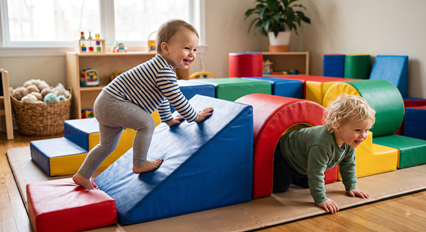
That's exactly why soft climbing blocks have become such a go-to option for early childhood play. They're not flashy. They don't light up or make noise. But they get kids climbing, crawling, balancing, stacking, and building - all the stuff that actually matters for development. Compare that to a lot of electronic toys, which mostly just keep a child's eyes and ears busy without asking much of their body. Soft play blocks ask for more, and give more back. They also give toddlers a safe space to test themselves physically and build real confidence, on their own terms.
Why Active Play Matters So Much Right Now
Here's the thing - people tend to obsess over language milestones and early academics during the toddler years, and sure, those matter. But physical movement is doing just as much work behind the scenes. Every time a toddler hauls themselves over an obstacle or wobbles across an uneven surface, they're quietly building:
* Muscle strength
* Balance and stability
* Hand-eye coordination
* Spatial awareness
* Problem-solving skills
* Confidence and independence
Paediatric health professionals have said this for years - movement-based play deserves just as much attention as reading and counting at this stage. A good play setup nudges kids toward staying active instead of parking in front of a screen.
Understanding Motor Development
Motor development, in simple terms, is a child's ability to control their own body. It splits into two rough categories.
Gross motor skills cover the big movements - crawling, walking, running, climbing, jumping, balancing. These are the building blocks (no pun intended) for almost everything physical a child does later.
Fine motor skills are the smaller movements - grasping things, stacking, turning pages, holding a crayon, picking up something tiny between two fingers.
Most toys lean heavily toward fine motor skills because, honestly, they're easier to design for. But climbing structures are one of the rare categories that build both at once - a toddler is gripping and adjusting their hands while their whole body is working to get up and over something.
The Role of Sensory Development
There's also a quieter kind of learning happening underneath all that climbing - sensory development. Every new texture under their palms, every shift in balance, every stretch to reach a higher block feeds information straight to a still-developing brain.
Toddlers are constantly relying on:
* Touch
* Sight
* Balance (the vestibular system)
* Body awareness (proprioception)
Climbing, crawling, and balancing activate all of these systems at once. It's not flashy, but it matters - this kind of sensory feedback plays a real role in healthy neurological development.
How Soft Climbing Blocks Encourage Learning
A playground slide is the same slide every single time. Soft climbing blocks aren't - they can be rearranged endlessly, which keeps things interesting and pushes kids toward more creative problem-solving instead of just repeating a memorised path.
With the same set of blocks, a toddler might end up building:
* Small obstacle courses
* Steps
* Bridges
* Tunnels
* Balance paths
* Mini climbing structures
Because the setup keeps changing, kids have to keep adapting how they move - there's no "solved" version of the course.
Supporting Gross Motor Skills
Climbing over foam structures works a surprising number of muscle groups at once. In the middle of what looks like just play, toddlers are practicing:
* Pulling themselves upward
* Maintaining balance
* Coordinating both sides of the body
* Shifting body weight
* Landing safely
* Improving posture
None of it feels like exercise to the child - it's just fun. But it adds up, and it sets the stage for more advanced physical skills down the line.
Building Confidence Through Independent Exploration
Part of growing up is learning to size up a challenge and decide how to tackle it - without someone doing it for you. Soft play equipment gives toddlers exactly that kind of room. It lets them:
* Choose which path to climb
* Experiment without real risk
* Learn from small mistakes
* Build resilience
* Develop genuine self-confidence
There's a particular kind of pride on a toddler's face after they climb a foam platform or crawl through a tunnel by themselves. That small win tends to make them want to try something a bit harder next time - and that's really the whole point.
Sensory Benefits of Soft Play
Soft play offers a good range of sensory input, without tipping into overload for a young child.
Different textures - Foam surfaces give kids a comfortable way to explore new materials.
Body awareness - Moving across uneven surfaces teaches a toddler where their body is in space, sharpening coordination and movement planning.
Balance development - Changing heights and angles challenge the vestibular system, which is central to balance.
Safe exploration - Because the material is soft, kids can actually focus on the movement instead of being distracted by fear of falling.
Encouraging Creative Play
Climbing might be the main event, but foam blocks rarely stay "just" climbing equipment for long. Give it ten minutes and they've become a castle, a mountain, a boat, an animal's home, a road, a secret hideout. That mix of physical play and imagination builds creativity - and when more than one kid is involved, it naturally pulls in communication and social skills too.
Choosing Quality Soft Play Equipment
Not all soft play gear is built the same, so it's worth checking for a few specific things:
* High-density foam that holds its shape
* Durable, wipeable outer covering
* Rounded edges
* Lightweight construction
* Secure stitching
* Non-toxic materials
Products that check these boxes tend to hold up well over time and stay genuinely comfortable - which matters whether it's going into a home, a daycare, or an early learning classroom. A lot of parents comparing options end up looking at collections from manufacturers like Banasuper, mainly on the strength of their safety standards and material quality.
Creating a Safe Play Environment
Even soft equipment isn't a "set it and walk away" situation. A few simple habits go a long way:
* Setting equipment up on level flooring
* Leaving enough open space around it
* Encouraging age-appropriate activities
* Keeping a closer eye on younger toddlers
* Checking the equipment now and then for wear
A little thought upfront lets kids explore confidently, without unnecessary risk hanging over the fun.
Supporting Social Development
Soft play is a physical activity but also a social activity. When there’s more than one toddler climbing the same structure they start to learn things like turn taking and cooperation almost without meaning to. Playing with friends often helps children to:
* Taking turns
* Cooperating
* Working through small conflicts
* Communicating ideas
* Developing empathy
* Building friendships
Obstacle courses especially - there's something about a shared challenge that gets kids working together without anyone having to explain why.
Indoor Activity for All Seasons
Weather doesn't always cooperate. Rainy weeks, brutal summer heat, cold winters - these are exactly the stretches where indoor movement options matter most. Soft climbing equipment keeps kids physically active indoors while still building real movement skills. And because the blocks can be rearranged, the play doesn't go stale — no need for anything electronic or complicated to keep it interesting.
Conclusion
At the end of the day, healthy toddler development comes down to giving kids real chances to move, explore, and figure things out for themselves. Physical activity sits right at the center of that - strength, coordination, confidence, sensory awareness, all built during some of the most important years of a person's life.
Soft climbing equipment gives toddlers a genuinely engaging way to build gross motor skills, while also opening the door to creativity, independent exploration, and imaginative play. Through climbing, balancing, crawling, and building, kids are strengthening their bodies and their understanding of the world - pretty much at the same time.
As families and early educators keep looking for play that actually does something, soft climbing blocks remain a solid, dependable choice - safe, active, and honestly just fun for kids to be around.