How Sewing Crafts Help Kids Develop Creativity and Patience
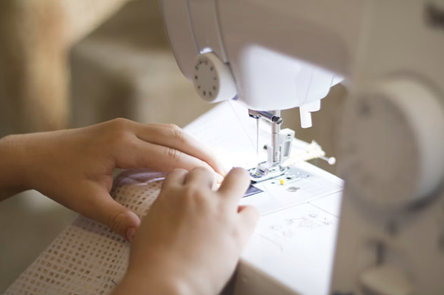
Many parents, grandparents and teachers have a quiet instinct that sewing would be good for the children in their lives, yet feel unsure whether they know enough to get started, or whether a child would really stick with it. The reassuring truth is that you do not need to be a confident sewer yourself. A gentle, step-by-step approach is all it takes, and having a local sewing machine shop in Ipswich to visit, ask questions and try things out can make those first steps feel far more manageable.
This article covers why sewing is such a powerful, calming craft for children, how it specifically builds creativity and patience, age-appropriate ways to begin at home, simple safety habits for nervous adults, and how Franklins Group in Ipswich can support you and your child along the way.
Why sewing is such a powerful craft for children
Sewing is hands-on in a way few activities match. Children move their fingers, feel different textures of fabric and watch a pile of cut pieces slowly become something real and usable. That visible progress, from nothing to a finished cushion or small bag, delivers a sense of competence that screen-based activities rarely can. There is something particular about holding an object and being able to say, "I made this myself.
The craft is also naturally slow and absorbing. Repeating a stitch, guiding fabric in a straight line, focusing on a small area at a time: all of this encourages children to settle and concentrate in a way that mirrors mindfulness, helping to reduce stress and ease overstimulation. Children who sew regularly tend to see improvements in fine motor skills, hand-eye coordination, spatial awareness and task completion.
Crucially, none of this requires long, ambitious sessions. Even short, occasional periods of sewing can gently strengthen focus, creativity and resilience over time, so this is a craft that rewards families who simply keep returning to it.
How sewing nurtures creativity and problem-solving
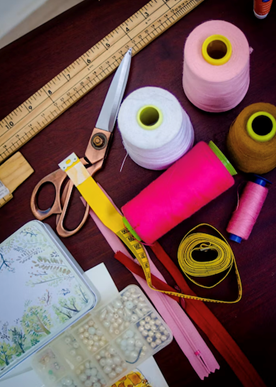
Every sewing project begins with decisions: which colours, which fabrics, what shape, how big. Even a simple felt bookmark or a small stuffed animal reflects the child who made it, because they chose those materials. This is design thinking in action, and it happens naturally, without ever feeling like schoolwork.
Planning a project, deciding what to make, roughly measuring pieces and arranging them before stitching, also stretches imagination and forward thinking. Children are essentially acting as designers, and the experience of seeing an idea in their head become something they can hold or give as a gift is genuinely transformative for confidence. When that confidence carries into other areas, such as trying a new subject at school or tackling a difficult puzzle, the connection is real.
Problem-solving is woven into every session too. A seam that goes crooked, a piece of fabric that turns out too short, a shape that does not quite fit: these are not failures, they are the craft working as it should. Children learn to adjust, to unpick a few stitches and try again, or to adapt the design so it still works. Adults can support this by asking open questions rather than stepping in to fix things. "Which fabrics do you think go well together?" or "How could we make that work differently?" invites the child to think rather than wait for an answer.
Franklins Group in Ipswich stocks child-friendly fabrics, colourful threads, beginner kits and simple project books, so children can browse and make choices that feel genuinely their own from the very start.
How sewing builds patience, focus and perseverance
Sewing teaches children to follow steps in order: pin the pieces, stitch along the edge, turn the fabric inside out, finish the seam. There is no skipping ahead, because the order genuinely matters. That quiet discipline of working through a sequence, rather than rushing to the end, is one of the most valuable things sewing teaches, and children experience it not as a rule imposed on them but as a natural part of getting a good result.
Accuracy rewards patience in a way children can see and feel. A straighter line of stitches, a neater seam, a shape that holds its form: these small improvements happen because a child slowed down, and that feedback loop is honest and satisfying.
Mistakes are inevitable, and how adults respond to them shapes everything. A knotted thread or a mis-cut piece is best met with calm curiosity. "Let's see if we can unpick that and try again" is far more useful than frustration, and modelling that response teaches resilience. Sewing provides plenty of gentle opportunities to practise it.
Realistic expectations by age matter here. Children between roughly four and six may manage only a few minutes with lacing cards or large stitches before their attention moves on, and that is entirely normal. Primary-aged children from around seven to eleven can usually follow simple hand-sewn projects with breaks built in, and older children from about ten upwards can begin supervised machine sewing once they are comfortable with the basics. Praising effort and persistence, "You kept going when the thread tangled" rather than "That looks perfect", keeps sewing encouraging rather than another source of pressure.
Finishing even a tiny project, a bookmark, a small pouch, a patched toy, helps children practise the satisfaction of seeing something through to the end. That habit of completion quietly supports homework, daily responsibilities and anything else that requires sticking at it.
Age-appropriate ways to start sewing at home
For children aged four to six, the goal is simply the feel and rhythm of threading something through holes. Cardboard or plastic sewing cards with pre-punched holes are ideal, as is lacing wool through large beads or making running stitches through hessian with a blunt needle and chunky yarn. The focus is on the sensory experience and the pleasure of pulling thread through, not on a finished product.
From around seven to nine, children can move to basic hand-sewing with a large, sturdy needle, soft felt and embroidery thread. Felt is forgiving because it does not fray, which keeps projects manageable and the results satisfying. Simple first makes include felt bookmarks, small shapes stuffed as mini cushions or toys, and basic drawstring bags where ribbon threads through a folded channel. These are projects a child can genuinely finish in one or two sessions, which matters enormously for keeping enthusiasm alive.
From ten or eleven onwards, children are usually ready to explore projects with more than two pieces, simple repairs to their own clothes, and, with supervision, the early stages of machine sewing. A good way to introduce a machine is to start with it unplugged, letting the child learn the parts and understand how fabric feeds through, then move to slow practice on scrap fabric, guiding it with both hands while an adult stays close. Short sessions of twenty to thirty minutes, stopped while the child is still enjoying themselves, work far better than long ones that end in frustration.
Franklins' team can help families choose the right needles, threads and fabrics for each age, suggest suitable starter hand-sewing kits, and point towards entry-level machines that are genuinely appropriate for beginners, so there is no need to guess what to buy.
Keeping children safe and confident with needles and machines
Safety worries are natural, and they are worth taking seriously without making sewing feel frightening. A few clear habits, repeated calmly at the start of each session, are all that most children need to sew safely and enjoyably.
For hand-sewing, show children how to carry scissors with the blades closed and pointing down, keep pins in a pincushion or a small box rather than loose on the table, and always sew sitting at a table with good light rather than on the floor. Packing everything away when the session ends becomes a routine quickly, and children feel proud of doing it properly.
With a machine, the core rules are simple: only use it when an adult is present, keep fingers well away from the needle at all times, start slowly and never force the fabric through, and always switch off and unplug before re-threading or walking away. Framing these as "the sewing rules" at the start of each session, rather than a one-off warning, makes them part of the ritual rather than a lecture.
The physical setup matters too. A stable table at the right height, a chair the child can sit in comfortably, good overhead lighting and no trailing cables where younger siblings might catch them will all reduce risk and distraction. Giving children specific, trusted jobs, pressing the foot pedal gently, passing pins one at a time, snipping threads when asked, helps them feel involved and responsible rather than just supervised.
Franklins' staff in Ipswich can demonstrate how entry-level machines work in practice, suggest protective accessories such as finger guards or magnetic pin holders, and answer any questions adults have in person, so you can leave the shop feeling genuinely prepared.
Visiting a sewing machine shop in Ipswich: taking the next step
There is a real difference between reading about sewing and standing in front of a machine, feeling a reel of thread, or watching a demonstration. Dropping into Franklins Group in Ipswich with your child lets them see and touch machines, compare fabrics and colours, and begin to picture what they might like to make. That moment of imagination, sparked by actually being in the shop, is often what tips a vague interest into genuine enthusiasm.
Staff can help adults choose a simple, reliable beginner machine suited to a child's age and the family's budget, or suggest starting entirely with hand-sewing equipment if that feels more appropriate for now. They can also let you know about any workshops or demonstrations that welcome families, giving children a chance to learn alongside others in a relaxed setting.
Bringing your child along to choose a first project kit, a small bag, a cushion, a soft toy, gives them ownership of the adventure before they have even threaded a needle. That sense of choice and excitement carries through to the first session at home.
The simplest next step is to set aside a short sewing time this week, gather a few basic materials, and try one small project together. Keep it short, keep it enjoyable, and when you are ready to go further, Franklins' shop in Ipswich is there to help you choose the tools and materials that will keep your child's creativity and patience growing, one stitch at a time.