How Much Does a Nanny Really Cost? A Parent’s Guide to Hidden Nanny Employment Expenses
Most parents begin with the hourly or weekly rate a nanny quotes. However, the amount that ultimately leaves the household account each month can be materially higher. In the UK, hiring a nanny also makes the family a household employer, bringing financial responsibilities that do not appear in the advertised wage.

Location further complicates the calculation. London and the South East commonly sit several pounds per hour above northern and rural areas for nannies with equivalent experience. Working patterns, the type of arrangement, and whether pay is agreed as gross or take-home can also shift the budget substantially. As a result, families need to look beyond the initial rate when building a realistic monthly and annual childcare budget.
What a Nanny Costs Before the Extras Kick In
A single national average offers limited help because nanny costs vary by role, location, hours, and living arrangements. Short bookings also price differently from full-time positions, while live-in packages include benefits that are not reflected in salary alone. Accordingly, families should compare gross, indicative figures for arrangements that genuinely match their childcare needs.
Rates by Nanny Type, Hours and Region
A live-out nanny typically costs £15 to £25 gross per hour, or roughly £31,000 to £52,000 annually for full-time work. A live-in nanny may earn around £28,000 to £42,000 a year because room, bills, and food form part of the package.
Part-time, after-school, and nanny-housekeeper rates commonly range from £16 to £25 gross per hour. Meanwhile, a maternity nurse might charge £220 to £350 per 24 hours. These arrangements offer different benefits of a nanny arrangement, so price alone does not make them interchangeable.
A two-hour after-school or evening booking usually carries a higher hourly rate and often a minimum booking period. Therefore, a full-time hourly guide may understate its cost. London and the South East also tend to cost several pounds more per hour than northern or rural areas.
One-Off Fees and Everyday Extras
All quoted figures should be treated as gross, indicative rates and checked against current local conditions and minimum-wage rules. A nanny quoting a take-home figure is describing a net-pay arrangement, which creates a different and potentially larger cost for the family.
Agency or finder’s fees are often calculated as a percentage of annual salary. Families may also pay for mileage, use and insurance of the family car, children’s activities, classes, outings, meals, and sometimes the nanny’s food. For a live-in nanny, the household also absorbs the cost of a bedroom, utilities, and board.
Gross or Net Pay, and Who Carries the Tax Bill
A gross salary agreement states the nanny’s pay before tax, National Insurance, student loan repayments, and other deductions. Those deductions come from the agreed amount, allowing the family to forecast its core wage cost. The contract should therefore record a gross hourly rate or annual salary rather than leaving the basis of pay open to interpretation.
A net salary agreement works differently. It guarantees a take-home amount, leaving the family responsible for whatever gross payment is required to produce it. If the nanny receives a different tax code, takes a second job, starts repaying a student loan, or is affected by changing thresholds, the employer pays the difference while the nanny’s payslip remains unchanged.
Industry and payroll guidance therefore consistently favours gross agreements. Although they do not remove employer costs, they prevent the nanny’s personal tax position from becoming an unpredictable household liability.
Families employing household staff also acquire formal employer responsibilities for household staff. These include registering with HMRC where required, operating PAYE and National Insurance, reporting pay in real time, issuing payslips each pay period, and keeping appropriate records. Most household employers must also hold Employer’s Liability Insurance, usually available for a modest annual premium.
Families can run payroll through HMRC’s Basic PAYE Tools, include it in an accountant’s monthly work, or use dedicated nanny payroll services that calculate deductions and produce payslips each period. The choice generally depends on the time involved and the cost of incorrect deductions or late reporting.
The Employer Costs That Sit on Top of the Wage

A nanny quotes payment for their work, not the family’s total employment bill. Employer contributions, insurance, and payroll duties sit outside that rate, while paid absences reduce the childcare received for the same salary. These costs require separate lines in a childcare budget rather than a vague contingency allowance.
Tax thresholds, National Insurance rates, and pension limits change each tax year. The following figures are therefore indicative and should be checked against the rules in force when the nanny is paid.
Employer’s National Insurance Explained
Employer’s National Insurance is charged on eligible earnings above the secondary threshold. The family pays it to HMRC on top of the nanny’s gross salary, rather than deducting it from the nanny’s wages.
Using an illustrative £40,000 annual salary, a 15% employer rate, and a £5,000 secondary threshold gives a contribution of about £5,250. This four-figure cost will not appear in the nanny’s salary quote. A higher gross salary also increases the employer contribution, so every pay rise has a secondary effect on the household budget.
Families employing a nanny for domestic work generally cannot use the Employment Allowance. Payroll calculations should always use current HMRC thresholds.
Workplace Pension Auto-Enrolment at 3%
A nanny who meets the relevant age and earnings conditions must normally be assessed for workplace pension auto-enrolment. The statutory minimum is generally 8% of qualifying earnings, comprising at least 3% from the employer and 5% from the employee.
The employer’s 3% contribution sits above the nanny’s salary. On a £40,000 salary, it may be roughly £1,000 using recent qualifying-earnings thresholds, although the precise amount depends on the pension scheme and current limits.
A nanny may opt out only through the pension scheme’s valid process. The employer must still assess eligibility, issue the required information, process the opt-out, retain records, and reassess the employee when required.
Holiday Pay, Sick Pay and Cover Costs
A full-time nanny is entitled to 5.6 weeks of statutory paid holiday each year, with entitlement pro-rated for part-time work. Holiday pay usually forms part of the annual salary, but the family continues paying the nanny without receiving childcare during those weeks.
The additional expense appears when cover is required. An agency worker, temporary nanny, or ad-hoc babysitter often charges more per hour than a permanent employee. Sickness and other leave can create the same overlap, leaving the family paying both salary and replacement care.
An indicative annual cost stack might be:
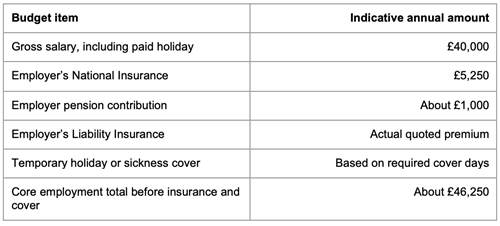
This gap exists before agency fees, mileage, food, activities, or replacement childcare enter the calculation.
Is a Nanny Cheaper Than Nursery in the UK?
For one child, a nursery or childminder is almost always cheaper than a nanny once the employer costs above are included. The provider carries the employment burden, whereas a nanny works for one household and brings PAYE, pension, insurance, and paid-leave obligations.
The calculation changes with two or more children. Nursery and childminder fees are normally charged per child, while a nanny’s salary and core employer costs do not automatically double for siblings. Parents comparing childcare options for working parents should therefore calculate the total annual cost per child.
A nanny share can divide salary and employer costs between two families. However, it requires separate contracts, agreement about the working location, and shared decisions on leave. Government-funded hours and Tax-Free Childcare may also affect the comparison because eligibility and treatment differ between nannies and registered providers.
Budgeting for a Nanny With Your Eyes Open
The honest nanny cost is not the rate printed on a CV. It is the gross salary plus Employer’s National Insurance, pension contributions, paid time off, insurance, payroll administration, and any cover required during absences.
A gross-pay contract and a line-by-line annual budget allow families to judge whether the arrangement will remain affordable throughout the year.