Helping Toddlers Explore Safely: A Parent’s Guide for Home, Play and Digital Life
Toddlers learn by exploring. They climb onto furniture, open cupboards, test new movements and press almost every button within reach. This curiosity is an important part of their development, but it can also introduce risks that young children are not yet able to recognise.
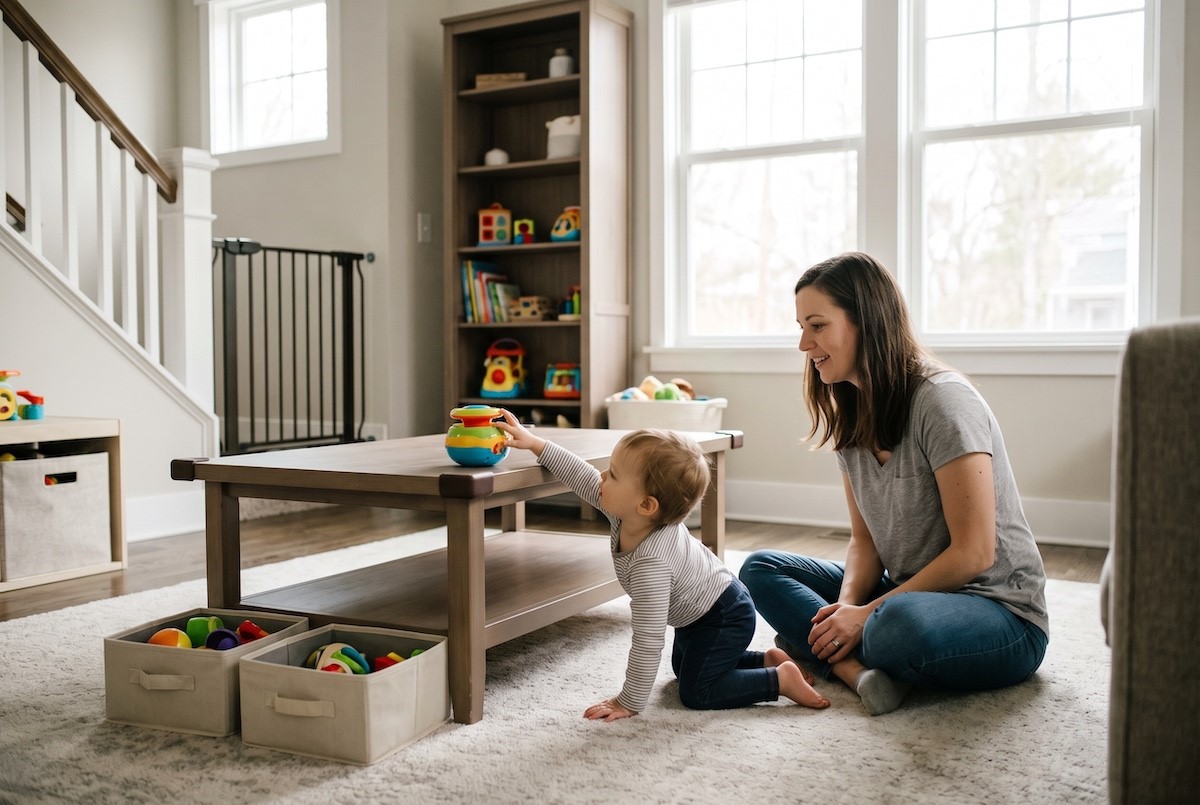
Creating a safer environment does not mean preventing every fall, mess or mistake. The aim is to remove serious hazards while giving children appropriate opportunities to become more confident and independent. By thinking about safety at home, during active play and in digital spaces, parents can establish boundaries that protect children without limiting their natural desire to discover the world.
Create safer boundaries at home
The best way to identify household hazards is to look at each room from a toddler’s perspective. Get down to their height and consider what they can reach, pull, climb or open. Items that appear harmless to an adult may be extremely tempting to a curious child.
Cleaning products, medicines, batteries, alcohol and sharp objects should be stored well above a child’s reach or behind a properly secured barrier. Rooms containing tools, household chemicals or other serious hazards should remain inaccessible, using safety latches or secure cabinet and door locks where appropriate.
Remember that a lock is only effective when adults use it consistently. After retrieving something from a cupboard, check that the door has been secured again. Keys and access codes should also be kept away from children.
Furniture presents another frequently overlooked risk. Bookcases, televisions and chests of drawers can tip if a toddler attempts to climb them. Heavy furniture should therefore be securely anchored in accordance with the manufacturer’s instructions. Avoid placing toys or attractive objects on high shelves, as these can encourage climbing.
Parents should also check window restrictions, blind cords, electrical cables and low tables with sharp corners. Stair gates need to be suitable for their intended position and correctly installed. Pressure-mounted gates, for example, may not be appropriate at the top of a staircase.
Safe boundaries should develop alongside the child. A solution that worked before a baby could walk may no longer be enough once they can climb, reach handles or move lightweight furniture.
Prepare carefully for active indoor play
Indoor play centres and trampoline parks give young children valuable opportunities to move, build confidence and practise balance. However, unfamiliar equipment, crowded activity areas and differences in children’s size or ability can increase the chance of accidents.
Before visiting a venue, check its age restrictions and whether it provides sessions specifically for toddlers. Quieter sessions can be a better introduction because children have more space to become familiar with the equipment. Areas designed for older children may involve heights, speeds or obstacles that are inappropriate for preschoolers.
Choose simple, comfortable clothing that allows free movement. Remove jewellery and avoid garments with long cords, loose accessories or anything likely to catch on equipment. Long hair should be tied back securely.
Footwear requirements vary between venues, so parents should check the rules before arriving. Many indoor activity centres require properly fitted trampoline grip socks to provide traction on smooth or padded surfaces. The socks should fit closely without bunching under the foot, and the grip sections should be clean and in good condition.
Even with suitable clothing and equipment, active supervision remains essential. Encourage children to wait for enough space before moving onto equipment and to follow instructions given by venue staff. Avoid letting toddlers jump alongside much larger children, as differences in weight and speed can make collisions more serious.
Parents should also recognise when a child has had enough. Tired or overstimulated toddlers are more likely to lose coordination, ignore instructions or become distressed. Taking a break is often safer and more enjoyable than trying to complete every activity.
Introduce digital communication gradually
Digital safety may seem like a concern for older children, but many toddlers now use phones or tablets to speak to grandparents, relatives and family friends. These calls can support meaningful relationships, particularly when loved ones live far away. However, digital communication should always be introduced with clear adult guidance.
Young children should only communicate with people personally known and approved by their parents. For toddlers who regularly video-call trusted relatives, parent-controlled video calling tools can help adults manage contacts, privacy settings and communication boundaries.
Devices are best used in a shared family space rather than behind a closed bedroom door. This allows parents to provide help, observe how the child responds and end the call if anything becomes uncomfortable. It also establishes the expectation that digital communication is a family-supported activity.
Parents should avoid sharing personal details during calls or in children’s profiles. Information such as a home address, nursery name, regular activity schedule or live location should not be disclosed unnecessarily. Privacy settings and permissions should be reviewed periodically, especially after an application update or the introduction of a new feature.
Screen time boundaries matter too. A short, interactive conversation with a grandparent is different from passively watching content, but it can still become tiring. Keep calls manageable and consider involving the child in singing, drawing or showing a favourite toy. This makes the experience more engaging and helps digital communication support real relationships.
Adults also provide the most powerful example. If parents put devices away during meals, ask permission before taking photographs and treat private information carefully, children begin learning that technology comes with responsibilities.
Teach simple safety habits
Physical protections are important, but toddlers can also begin learning simple habits that apply across different settings.
Use short, consistent phrases such as “stop and ask”, “feet on the floor” or “only with a grown-up”. Clear language is easier for young children to remember than lengthy explanations. Parents can practise these rules during calm moments rather than waiting until a dangerous situation occurs.
Praise children when they pause, ask permission or follow an instruction. Positive reinforcement helps them associate safe behaviour with confidence and independence rather than fear.
At the same time, expectations should remain realistic. Toddlers have limited impulse control and may understand a rule without following it consistently. Teaching safety does not replace supervision, secure storage or age-appropriate environments.
Supporting confident exploration
Children need opportunities to explore, move and connect with others. The safest approach is not to remove every challenge, but to distinguish manageable experiences from preventable hazards.
By securing high-risk areas at home, preparing carefully for active play and guiding children’s earliest digital interactions, parents can create boundaries that evolve as their toddler grows. With thoughtful supervision and simple, consistent rules, young children can develop independence while knowing that a trusted adult is always nearby.