Family Days Out in Wantage and the Vale of White Horse
Wantage sits at the foot of the Berkshire Downs, about 15 miles south west of Oxford. It is a market town with a compact centre, a statue of King Alfred in the Market Place, and open countryside within a few minutes' drive. For families, that mix matters. You can spend a morning in town, then be standing on a chalk hillside by early afternoon.
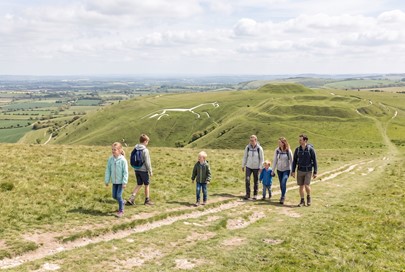
This piece looks at how a day out here tends to work in practice: where the green space is, how far children will realistically walk, what the ground underfoot is like, and which details are worth checking before you leave the house. It is written as general local background rather than a recommendation of any one place.
A town centre you can cover on foot
The heart of Wantage is the Market Place and the streets running off it, including Wallingford Street, Mill Street and Newbury Street. Almost everything in the centre is within a five to ten minute walk. That suits short legs and short attention spans.
Market stalls usually appear in the Market Place on Wednesdays and Saturdays, so the square is busier and noisier on those mornings. Some families treat that as the main event; others avoid it if a child finds crowds difficult. Both are reasonable. The square has benches and step-free routes around most of its edges, though the older pavements are uneven in places.
Church Street runs towards the parish church and the Vale and Downland Museum, which covers the history of the town and the surrounding downland. Smaller local museums often have limited opening days, so it is worth confirming times rather than turning up on spec.
Getting there and parking
Wantage has no railway station. Most visitors arrive by car or by bus, with services linking the town to Oxford, Didcot and nearby villages such as Grove, Ardington and Letcombe Regis. Buses generally set down close to the Market Place, which keeps the walk with a pushchair short.
There are public car parks near the centre, including Limborough Road for shorter stays and Portway for longer ones. Charges and maximum stay times change from time to time, so read the signs on arrival. If you are planning a full day that includes a walk, a long stay bay removes the need to move the car halfway through.
Green space and water close to town
Letcombe Brook runs through Wantage and gives the town several quiet, shaded stretches of path. Children are often more interested in the water than in anything else on the itinerary, so it is worth saying plainly: the brook is shallow in many places but the banks can be slippery after rain, and supervision is sensible.
Betjeman Millennium Park, named after the poet John Betjeman, who lived nearby, is a short walk from the centre. It is a modest green space rather than a large country park, which is exactly what you want when a toddler has run out of patience. There are also recreation grounds and play areas scattered around the town and in Grove, the large village immediately to the north.
The Letcombe Valley nature reserve, just outside Wantage at Letcombe Regis, offers a gentler introduction to the chalk stream landscape. Paths there are more rural, with gates and some soft ground, so check conditions if you are bringing a buggy or a wheelchair.
Up on the Downs
The best known attraction in the Vale of White Horse is the Uffington White Horse, a prehistoric chalk figure cut into the hillside around six miles west of Wantage. The site also takes in Uffington Castle, an Iron Age hillfort, and the distinctive flat topped mound known as Dragon Hill. The long distance Ridgeway path runs along the ridge above.
It is open, exposed ground with no fences along the slopes and no shelter. In practice that means three things. Wind is stronger at the top than in the car park. Grass gets very slippery when wet. And young children need to be kept close, because the hillside falls away sharply in places.
Practical points for open countryside
* Wear proper shoes. Chalk and grass are a poor combination for trainers after rain.
* Take water and sun cover in summer; there is very little shade on the ridge.
* Expect livestock in some fields. Keep dogs on a lead and give cattle room.
* Check for ticks after walking through long grass, especially on children's legs and hairlines.
* Mobile signal can be patchy, so download maps before you go rather than relying on a live connection.
If the forecast is poor, the Downs become a harder day with children. Swapping to a town based plan is usually better than pushing on in sideways rain.
Planning around ages, access and energy
A day out with a four year old and a day out with a ten year old are not the same day. Mixed age groups tend to work best when the plan has an early, short, reliable element and a longer optional one later. A play area first, a hill walk second, with the option to drop the hill.
Access needs deserve the same early thought. Step-free routes, blue badge bays, accessible toilets and baby changing facilities are not evenly spread across a small market town and the villages around it. Pub gardens and village halls vary widely. Where a venue does not publish this information, a short phone call is usually quicker than guessing.
It also helps to know where the fallback options are. Public toilets, a supermarket, a café that tolerates noise, and a car park you can reach quickly all reduce the pressure when a day goes sideways. Most families who visit the Vale regularly build their plans around those anchors rather than around attractions.
Why checking local details still matters
Opening hours in small towns shift with the seasons, with staffing and with school holidays. Museums close on quieter weekdays. Village pubs stop serving food mid afternoon. Events are cancelled for weather. None of this is unusual, and none of it is a sign that somewhere is badly run.
That is the gap local directories and listings sites try to fill. The useful ones are transparent about where their information comes from and how it is kept current. For example, wantage.com, an independent local guide run by First Ideas Ltd, lists businesses free of charge, checks details against each business's own website and other public sources, and invites corrections on every page. Any paid Featured listing there is labelled as such and does not change other listings or what the guides say. Readers using any directory to see what's on in Wantage are still best served by confirming times with the venue itself before travelling.
Wantage will not fill a week. What it does offer is a manageable day: a walkable centre, water and green space within pram distance, and one of the most striking stretches of chalk downland in southern England a short drive away. Plan for the weather, pace it for the youngest person in the group, and the rest tends to look after itself.