Ergonomic Pregnancy Belt: How to Choose an Adjustable Maternity Support Band for Back, Hip and Pelvic Pain Relief
An ergonomic pregnancy belt can help some pregnant people reduce lower back, hip and pelvic discomfort by gently supporting the belly and stabilising the pelvis during daily movement.
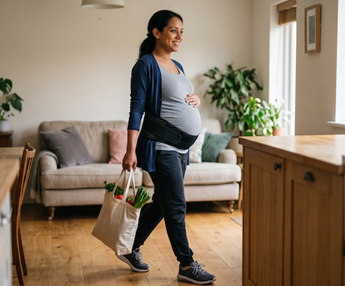
If standing at the sink, walking through a store or getting out of the car makes your lower back or pelvis ache, the weight of a growing bump may be changing how your body carries load. A well-fitted adjustable maternity support band can give practical support during the second and third trimesters without replacing medical care, exercise or rest. Here is how to decide whether a pregnancy belt fits your symptoms, body and daily routine.
Why Pregnancy Belts Are Used for Back, Hip and Pelvic Pain
Pregnancy changes posture, joint stability and weight distribution. As the abdomen grows forward, the lower back often works harder to counterbalance the bump, while the hips and pelvis adapt to increased load. A 2019 systematic review published through PMC reported that pregnancy-related pelvic girdle pain affects about 20% of pregnant women, while lower back pain affects more than 65%. Healthline also cites Spine Journal data indicating that 71% of pregnant women report low back pain and 65% report pelvic girdle pain.
An ergonomic pregnancy belt is designed to support the lower abdomen and lower back so the body does not carry all of that forward weight unsupported. The goal is not to “hold everything in” tightly. The goal is controlled lift, gentle compression and pelvic support during the activities that tend to trigger discomfort, such as walking, standing, commuting, household chores or light workdays.
What the Evidence Suggests
The 2019 systematic review assessed maternity support garments as a sole intervention for pregnancy-related lower back pain, pelvic girdle pain and discomfort. Six studies met the review criteria, including three trials, two pilot studies and one observational study. Across the evidence, the main reported outcomes were pain alleviation, balance improvement and improved function or mobility.
That does not mean every pregnancy belt works equally well for every person. The evidence supports a more practical conclusion: maternity support garments may help some pregnant people feel more stable and comfortable, especially when symptoms are linked to movement, posture or prolonged standing. The right belt should make daily activity feel easier, not restrictive.
Common Pain Patterns a Belt May Help
A pregnancy support belt may be most useful when pain appears during load-bearing activities. For example, lower back aching after 20 minutes of standing, pelvic pressure while walking, hip discomfort during errands or sacroiliac-area pain when moving from sitting to standing may respond to added support.
Round ligament discomfort, often felt as sharp or pulling pain along the lower belly in the second trimester, may also feel better with gentle abdominal support because the belt helps distribute bump weight across the abdomen and back. However, pain that is severe, one-sided, associated with bleeding, fever, contractions, dizziness or reduced fetal movement should be assessed by a clinician rather than managed with a support garment alone.
Pregnancy Belt, Belly Band or Prenatal Cradle: Which Support Type Fits Your Need?
Not all maternity support products do the same job. Medical News Today distinguishes between flexible belly bands, more structured belly belts, prenatal cradles, maternity support clothing and postpartum wraps. For back, hip and pelvic pain relief during pregnancy, the most relevant options are usually belly bands, adjustable belly belts and prenatal cradles.
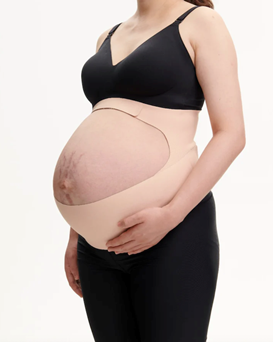
A flexible belly band is often a tube-like garment worn around the belly. It can extend the life of pre-pregnancy pants and provide light compression, but it usually offers limited structural support. An adjustable maternity support belt is typically more rigid and strap-like, sitting under the abdomen and around the lower back to support the belly, pelvis, hips and lumbar area. A prenatal cradle adds an upper strap over the belly to create a more complete support structure.
Best for Mild Discomfort: Flexible Belly Band
A belly band may be enough if your main issue is mild belly heaviness, clothing discomfort or light pressure during short periods of movement. It is usually inexpensive, soft and easy to wear under clothes. It may also be useful postpartum for light abdominal coverage, depending on the design.
The tradeoff is support. Flexible bands can bunch, roll or shift during walking, especially if the fabric is too soft or the size is wrong. If you need relief for lower back pain, pelvic girdle pain or hip instability, a simple belly band may feel comfortable but not supportive enough.
Best for Back, Hip and Pelvic Support: Adjustable Maternity Belt
An adjustable pregnancy belt is usually the stronger choice when the goal is pain relief during standing, walking or activity. It should lift the underside of the bump slightly, support the lower abdomen and wrap securely across the lower back. Many designs use hook-and-loop closures or side tension straps so the fit can change as the belly grows.
This adjustability matters because pregnancy size changes are not linear. A belt that feels correct at 24 weeks may need a different setting at 30 weeks, and a belt worn for errands may need less tension than one used for a longer standing task. The best design gives enough range to fine-tune support without forcing you into a tight or fixed compression level.
Best for Stronger Front-and-Back Support: Prenatal Cradle
A prenatal cradle may suit people who feel significant belly heaviness or need support across both the lower belly and upper bump. Because it includes a lower belt and an upper strap, it can distribute weight more broadly than a simple band. This may help during longer periods upright.
The drawback is bulk. A cradle can be warmer, more visible under clothing and less convenient for quick bathroom trips or short outings. For many people, a standard adjustable maternity belt is the more practical daily option, while a cradle is reserved for higher-support needs after discussion with a healthcare professional.
How to Choose an Ergonomic Pregnancy Belt
A good pregnancy belt should feel supportive within the first few minutes, but it should also remain comfortable after real movement. Try to evaluate it the way you will actually use it: standing, sitting, walking, climbing stairs, getting in and out of a chair and bending lightly to pick up an item from a counter or table.
The 2019 systematic review noted that commercial maternity support garment sizes may cover hip circumferences from about 78 cm to 178 cm, with prices reported around $20 to $99.95 USD. That range is broad, so the best choice is not simply the most expensive belt. Fit, adjustability, breathability and correct support placement matter more than price alone.
Fit and Adjustability
Measure around the hips or lower abdomen according to the manufacturer’s sizing guide, not your pre-pregnancy clothing size. If you are between sizes, choose the belt that gives room to adjust upward as pregnancy progresses. A belt that starts near the end of its adjustment range may become unusable within a few weeks.
Look for two adjustment zones if possible: a main closure for basic fit and side straps for tension control. This lets you apply lighter support while sitting or resting and firmer support for walking or standing. The belt should sit low under the bump, not across the middle of the abdomen.
Support Level and Stability
For lower back pain, look for a belt with a supportive back panel or reinforced lumbar area. For pelvic girdle pain, the belt should feel stable around the pelvis and hips, not just the belly. For general bump heaviness, a soft but structured under-belly lift may be enough.
A practical test is simple: after fastening the belt, stand and walk for two to three minutes. You should feel that the bump is lightly supported and the lower back is less loaded. If you mainly feel squeezing, pinching or pressure on the top of the belly, the belt is either positioned incorrectly, tightened too much or not suited to your body.
Fabric, Heat and Daily Comfort
Breathable materials matter because maternity support belts sit against warm areas of the body and are often worn under clothing. Medical News Today notes that tight or constrictive maternity garments should not be worn for long periods, especially in heat, during exercise, with limited airflow, during complicated pregnancy or illness.
Choose fabric that feels smooth at the edges and does not dig into the skin when sitting. If you live in a warm climate or expect to wear the belt while commuting, a lighter mesh design may be more comfortable than a thick padded belt. If you have sensitive skin, consider wearing the belt over a thin cotton layer rather than directly against the skin.
When to Start Wearing a Pregnancy Support Belt
Many people first consider a pregnancy belt in the second trimester, when the belly becomes heavier and round ligament, hip or lower back discomfort may appear. Others may not need one until the third trimester, when standing and walking become more tiring. There is no universal week when everyone should start.
The better question is whether symptoms are interfering with normal movement. If you notice that you avoid short walks, shift your weight constantly while standing or need frequent breaks because of pelvic or back discomfort, it may be reasonable to try an adjustable maternity support band. If pain is mild and occasional, posture changes, rest breaks, supportive shoes and prenatal exercises may be enough.
Activity-Based Use Works Best
A pregnancy belt is usually most helpful when used for specific activities. Examples include grocery shopping, cooking, commuting, school pickup, light workplace tasks, travel days or prenatal walks. Wearing it for targeted support is different from relying on it all day.
For instance, someone at 28 weeks with lower back aching after 30 minutes of standing might wear the belt during meal prep and errands, then remove it while resting. Someone with pelvic pressure during a daily walk might wear it only for that walk. This keeps the belt useful without turning it into a constant brace.
When a Belt May Not Be Enough
If pain remains intense even with proper support, if walking becomes difficult, or if symptoms include numbness, weakness or sharp radiating pain, a maternity belt should not be the only strategy. A clinician, pelvic health physical therapist or prenatal physiotherapist can assess whether the issue involves pelvic girdle dysfunction, sciatica-like symptoms, muscle weakness or another condition.
Support garments can reduce load, but they do not correct every cause of pain. Healthline notes that belly bands should be combined with core-strengthening exercises or physical therapy when needed. That combination is often more useful than simply tightening the belt more.
How Tight Should a Pregnancy Belt Be?
A pregnancy belt should feel snug, low and supportive, never restrictive. You should be able to breathe normally, sit comfortably and slide a couple of fingers under the belt edge without strain. It should not create numbness, tingling, sharp pressure, skin marks that linger, shortness of breath, dizziness, heartburn or indigestion.
Healthline cautions that excessive abdominal compression may affect circulation, blood pressure and digestion. The practical rule is that support should reduce discomfort while moving, not create new discomfort while sitting or breathing. If the belt feels better only when extremely tight, the design or size may be wrong.
Step-by-Step Fitting Guide
1. Put the belt on while standing, ideally over a thin clothing layer.
2. Position the main support section under the belly, low across the hips and pelvis.
3. Wrap the back panel around the lower back, not high on the waist.
4. Fasten the main closure until the belt feels secure but not tight.
5. Adjust side straps gradually until the bump feels lightly lifted.
6. Walk, sit and stand again to test whether the belt shifts or presses.
7. Loosen or reposition it if you feel squeezing across the abdomen.
The belt should not ride up toward the ribs or press into the upper belly. If it rolls, gaps or slides down, check the size and placement. If the lower edge digs into the thighs when sitting, you may need to lower the tension or choose a narrower style.
Wear-Time Guidance
A useful guideline is to wear a belly band or pregnancy support belt for no more than 2 to 3 hours at a time. This recommendation is echoed by Healthline, which frames belly bands as temporary support rather than all-day wear. Remove the belt during long rest periods unless your clinician gives different advice.
Use breaks intentionally. After wearing the belt for a grocery trip or a work task, take it off and notice whether your body feels better, unchanged or more dependent on the support. If you feel weaker or more uncomfortable without it over time, ask a prenatal healthcare professional about strengthening and movement strategies.
What Results Can You Realistically Expect?
An adjustable maternity support belt is not a cure for pregnancy pain, but it may make everyday tasks more manageable. The strongest practical benefits are usually improved comfort during movement, reduced sensation of belly pulling, better perceived stability and less lower back fatigue during standing.
Research supports these realistic expectations. The PMC systematic review identified pain alleviation, balance improvement and improved functionality or mobility as the key outcomes across included studies. Medical News Today also summarizes a 2018 study of 90 pregnant women in which maternity support belts slightly improved posture across all trimesters, and a 2014 study of 90 pregnant women in which support belts improved balance and reduced fall risk during all trimesters.
A Practical Before-and-After Check
Before buying or using a belt regularly, define one or two measurable goals. For example: “I want to stand for 20 minutes while cooking with less lower back ache,” or “I want to walk around the store without pelvic pressure starting after the first aisle.” This makes it easier to judge whether the belt is actually helping.
After wearing the belt for that specific task, rate discomfort from 0 to 10 before, during and after use. If pain drops from 6 to 3 during a 25-minute walk, that is meaningful. If pain stays the same or the belt creates pressure, it is not the right support strategy in its current fit.
What a Belt Should Not Do
A pregnancy belt should not force posture into an unnatural position, flatten the belly, hide pain signals or allow you to push through severe symptoms. It should also not replace prenatal care, pelvic floor assessment or physical therapy when pain is persistent.
Be especially cautious if you have a complicated pregnancy, high blood pressure concerns, significant swelling, skin irritation, abdominal pain, contractions or any condition where compression has not been cleared by your clinician. In those cases, ask before using a support garment.
Practical Next Steps
Start with your main symptom: lower back fatigue, hip discomfort, pelvic pressure or belly heaviness. For mild support and clothing comfort, a flexible belly band may be enough. For back, hip and pelvic pain during walking or standing, an adjustable ergonomic pregnancy belt with a low under-belly design and supportive back panel is usually the more targeted choice.
Fit it low, keep it snug rather than tight, and use it for specific activities instead of wearing it continuously. A reasonable wear pattern is 1 to 3 hours during higher-demand tasks, followed by a break. If the belt reduces pain and helps you move more comfortably, it is doing its job; if it causes pressure, digestive discomfort, numbness or new pain, loosen it, reposition it or stop using it.
The most effective approach is support plus body care: comfortable shoes, frequent position changes, prenatal-safe strengthening, rest breaks and professional guidance when pain is persistent. An adjustable maternity support band can be a useful tool for pregnancy-related back, hip and pelvic pain relief, but the right fit and the right use pattern matter as much as the belt itself.