Easy Online Jigsaw Puzzles for Toddlers and Preschoolers
Jigsaw puzzles are one of those classic activities that never go out of fashion. Most of us remember a chunky wooden puzzle from our own childhood. Today, alongside the cardboard boxes in the toy cupboard, there are also plenty of free online jigsaw puzzles that little ones can play on a tablet or computer. Here is why puzzles are so good for young children, how to choose the right level, and where to find simple puzzles online.
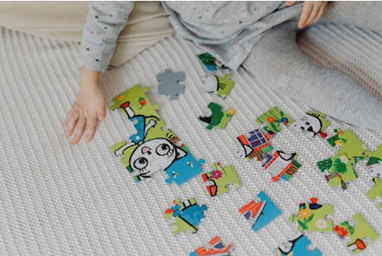
Why jigsaw puzzles are good for 2 to 5 year olds
Puzzles look simple, but they give young children a surprisingly good workout:
* Fine motor skills. Picking up, turning and placing pieces (or dragging them on a screen) helps develop hand control and hand-eye coordination.
* Problem solving. Children learn to test ideas: does this piece fit here? No? Let's turn it round or try another spot.
* Shapes and colours. Matching edges, corners and colours builds early visual and spatial skills.
* Patience and focus. Finishing a puzzle takes a few minutes of concentration, and the "I did it!" moment at the end is a real confidence boost.
* Puzzles are a lovely chance to chat: "Can you find the dog's tail? What colour is the sky?"
How many pieces should you start with?
Every child is different, but this rough guide works well:
* Age 2: 2 to 6 large pieces, or simple inset puzzles where each shape has its own spot.
* Age 3: around 6 to 12 pieces with a clear, bright picture.
* Age 4: around 12 to 24 pieces.
* Age 5: 24 to 48 pieces, and some children happily go further.
Start a little below what you think your child can manage. Success keeps them interested; frustration makes them walk away. Pictures of familiar things such as animals, vehicles and favourite foods work best, because children can use what they know to work out where a piece goes.
Online puzzles versus physical puzzles
Physical puzzles are wonderful and nothing beats the feel of real pieces. Online puzzles are a handy extra, though. They are perfect for a train journey, a waiting room or a rainy afternoon, there are no lost pieces under the sofa, and you can choose from thousands of pictures without buying a new box each time.
A few tips to keep screen time positive: sit with younger children at first, keep sessions short, and choose sites that don't require downloads or sign-ups.
Free sites to try
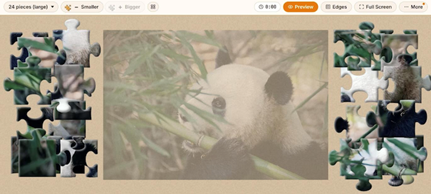
Online Jigsaw Puzzles. A free site with over 4,000 puzzles that works in any browser on a tablet, phone or computer. The smallest puzzles have 24 pieces, a nice level for 4 and 5 year olds. For younger children, the Bigger + button zooms in so the pieces become really large and easy for little fingers to tap and drag. There are lots of cheerful pictures of animals, nature and seasonal themes such as Christmas, with no app to download and no account needed.
Jigsaw Planet. A large collection of user-made puzzles where you can choose the number of pieces before you start.
Jigsaw Explorer. Offers a daily puzzle and a picture library, with an adjustable piece count.
Whichever site you choose, start with the easiest setting and make it harder bit by bit as your child gains confidence.
Making puzzle time fun
* Do the first puzzle together and let your child place the final piece.
* Talk about the picture before you start, so they know what they're building.
* Celebrate finished puzzles, however small.
* Mix it up: a wooden puzzle one day, an online puzzle the next.
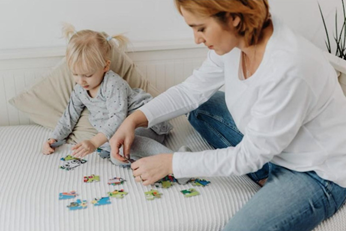
Jigsaw puzzles are a simple, low-cost way to support your child's development while having fun together. Whether it's a chunky wooden puzzle on the kitchen table or a quick online puzzle on a tablet, those little "it fits!" moments add up.
About the author: Paul runs onlinejigsawpuzzles.net, a free website with thousands of jigsaw puzzles for all ages, from easy 24-piece puzzles to 1,000-piece challenges for grown-ups.