Designing a Low-Maintenance Garden for the Kids
Do you need an outdoor space that works for you and your kids? Often, it can seem difficult to achieve without hours of maintenance and upkeep.
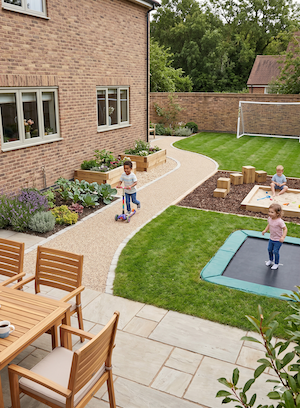
We’ve laid out this guide, which aims to help you create a great-looking garden that doesn't eat into your schedule.
Plan Around How You Actually Use the Space
Before you think about plants or furniture, think about your family and where your kids play. Where do you want to sit with a coffee while keeping an eye on them? Do you need space for a trampoline, a sandpit, or a goal post that seems constantly on the move?
You can really make the whole thing easier by getting the right layout sorted. Our main suggestion is to keep higher maintenance parts, like flower beds or vegetable patches, close to the house so they're quick to reach during those rare five-minute windows.
Just make sure pathways are wide enough for bikes, scooters, and buggies, and think about creating clear zones so the play area, the seating area, and the planted areas don't end up merging into one chaotic muddy mess. A layout that genuinely suits how your family lives will save you hours over the course of a year, and make the garden feel like a bonus rather than another chore.
Rethink the Lawn
A big lawn sounds ideal for families and to be fair, kids do love a bit of grass to run around on. But keeping a lawn looking good is one of the biggest time drains in any garden. Mowing, edging, feeding, reseeding the bare patches where the goal was... it adds up fast.
Consider reducing the lawn area rather than getting rid of it entirely. Swap part of it for paving, decking, or gravel, and use the grass you do keep for actual play. A paved patio makes a brilliant spot for outdoor eating, paddling pools, and garden toys, while a gravel area can double as a play zone without turning into a mud bath every time it rains. You still get that open, spacious feel, and don’t need much work to keep it looking presentable.
Pick Materials That Can Take a Beating
Family gardens need to be tough as well as tidy, and the materials you choose make a huge difference. Porcelain paving is easy to hose down after muddy games and keeps its smart appearance without much effort. Composite decking handles wet wellies, bikes, and outdoor furniture without warping or rotting the way timber can, and it doesn't need annual treating or staining.
Gravel also works very well, mainly due to its draining acumen and ability to keep muddy patches at bay. It also looks good, clean and structured when the rest of the garden is in chaos.
Timber sleepers are worth considering, too. They might not sound glamorous, but they're incredibly useful for defining borders, creating raised beds, or adding gentle level changes to the garden. They blend naturally into almost any style and need virtually zero maintenance, which is exactly what you want.
Choose Plants That Look After Themselves
Low-maintenance doesn't mean your garden has to look sparse or boring; it’s really all about thinking strategically with your planting.
Hardy perennials are brilliant for family gardens because they come back year after year without you needing to replant them. Evergreen shrubs keep things looking structured and green even in the depths of winter when everything else has died back.
Grouping plants with similar needs together makes life even easier, and adding a generous layer of mulch around your beds will suppress weeds, lock in moisture, and reduce the amount of watering and weeding you need to do week to week. It's one of those small jobs that saves a disproportionate amount of effort over the whole season.
A Garden That Works For Your Whole Family
You don't need a total redesign or a big budget to create a garden that looks great and fits around family life. Start with a plan that reflects how you actually use the space, choose materials that are durable and easy to clean, and pick plants that suit your conditions rather than fighting against them. Layer in a few practical touches, think mulch and storage, and there’s a garden that stays low-maintenance without feeling sterile or boring.
The goal is a space where the kids can play, you can relax, and nobody has to spend their entire Sunday afternoon tidying up to make it look presentable again. That's a garden worth having.