Choosing a Home That Meets a Growing Family's Needs
Family homes have to keep pace with the number of people, activities and belongings inside them, and that balance gets tested the moment a household starts to grow. Bedrooms that felt generous with one child can feel tight with two, and a home office can turn into a nursery almost overnight.
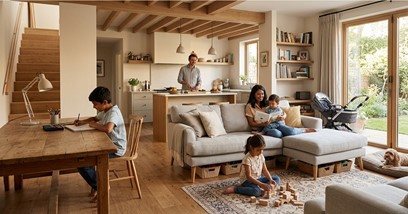
That growth comes in more than one shape, whether it's a new baby, two households merging into one, or a child joining the family through fostering, and each route brings its own demands for space and routine. Working out what a home actually needs matters far more than chasing square footage for its own sake.
Families Grow In More Than One Way
New babies are the most obvious way a household expands, but they're far from the only route into a bigger family. Blended families bring children and belongings together under one roof, often needing more overlap in bedrooms and storage than either household needed on its own. Families who welcome a child through fostering in Birmingham often need a spare room kept ready at short notice, since placements can be arranged with very little warning. Whichever route a family takes, homes that flex easily with change tend to work best, and adapting homes to changing family structures has become one of the fastest growing areas of home improvement in the country.
How Many Bedrooms A Family Actually Needs
Two children close in age can often share a room happily for years, while a bigger age gap or a mix of genders usually shortens that window. A few concrete factors tend to decide how much space a family can realistically get away with:
* Age gaps between children, since teenagers rarely want to share with a much younger sibling
* Whether a spare room is needed for visiting family or a child joining the household
* Enough room for homework, hobbies or simply somewhere to be alone
* Access to a garden where children can play without disturbing the rest of the house
None of these factors carry the same weight in every household, which is why the right number of bedrooms looks different from one family to the next, even among houses of a similar size.
Storage And Belongings Multiply Faster Than You'd Expect
Prams, cots and highchairs take up far more room than most parents picture before the first delivery arrives, and that clutter only grows as children get older. Getting the most from a small child's bedroom usually comes down to a few clever storage choices rather than extra square footage, from under-bed drawers to wall-mounted shelving that keeps toys off the floor. A hallway with proper coat and shoe storage often makes more difference to daily life than an extra half a metre in the living room.
Location And Layout Still Matter As Much As Size
School catchment areas can narrow the search considerably before size or layout even come into the conversation, since moving later to stay near a good school is far harder than choosing carefully the first time. A home with bedrooms far from bathrooms, or where the only quiet space doubles as a workspace, can feel smaller than its floor plan suggests. Whatever stage a family is at, the goal is a home that still works once the people living in it, and how they use the space, has changed.