What Is Actually Involved In A Child's SALT Assessment?
What Is Actually Involved In A Child's SALT Assessment?
If you have just been told your little one needs a referral to Speech and Language Therapy, or you are wondering whether it is time to ask for one, you are probably picturing something a bit clinical and daunting. The good news is that a SALT assessment is usually a lovely, relaxed experience, built entirely around getting to know your child properly rather than putting them through a test. Let's take a little journey, step by step, so you know what to expect and can feel completely confident going in...
First Things First, What Is SALT?
Speech and Language Therapy is all about helping children communicate as well as they possibly can. That might mean how they physically produce sounds, how they understand what is being said to them, how they put sentences together, or even how they use their voice or manage eating and swallowing. A SALT assessment is simply the process a therapist uses to figure out where your child is thriving and where they might benefit from a bit of extra support.
Before You Even Meet The Therapist
A good assessment starts well before your child sets foot in the room. Most services will send you a questionnaire or ask you to have a chat over the phone first. This is where you get to share the bigger picture: your child's birth history, any early feeding or hearing issues, milestones like when they started babbling, saying first words, or joining words together, and what family life sounds like at home. Nobody knows your child better than you, so this background information is genuinely gold dust for the therapist. They will use it to shape the whole session around your child's particular story.
The Chat With You
When the appointment itself begins, expect a warm, friendly conversation. The therapist will want to hear about your worries in your own words. Perhaps your child is hard to understand outside the family, or they seem to struggle following instructions at nursery, or they are a bit quieter than their friends. There is no such thing as a silly concern here, so say it exactly as you see it. The therapist might also ask about your child's interests, favourite toys, and daily routines, partly to build rapport and partly because it helps them plan activities your child will genuinely enjoy.
Getting To Know Your Child Through Play
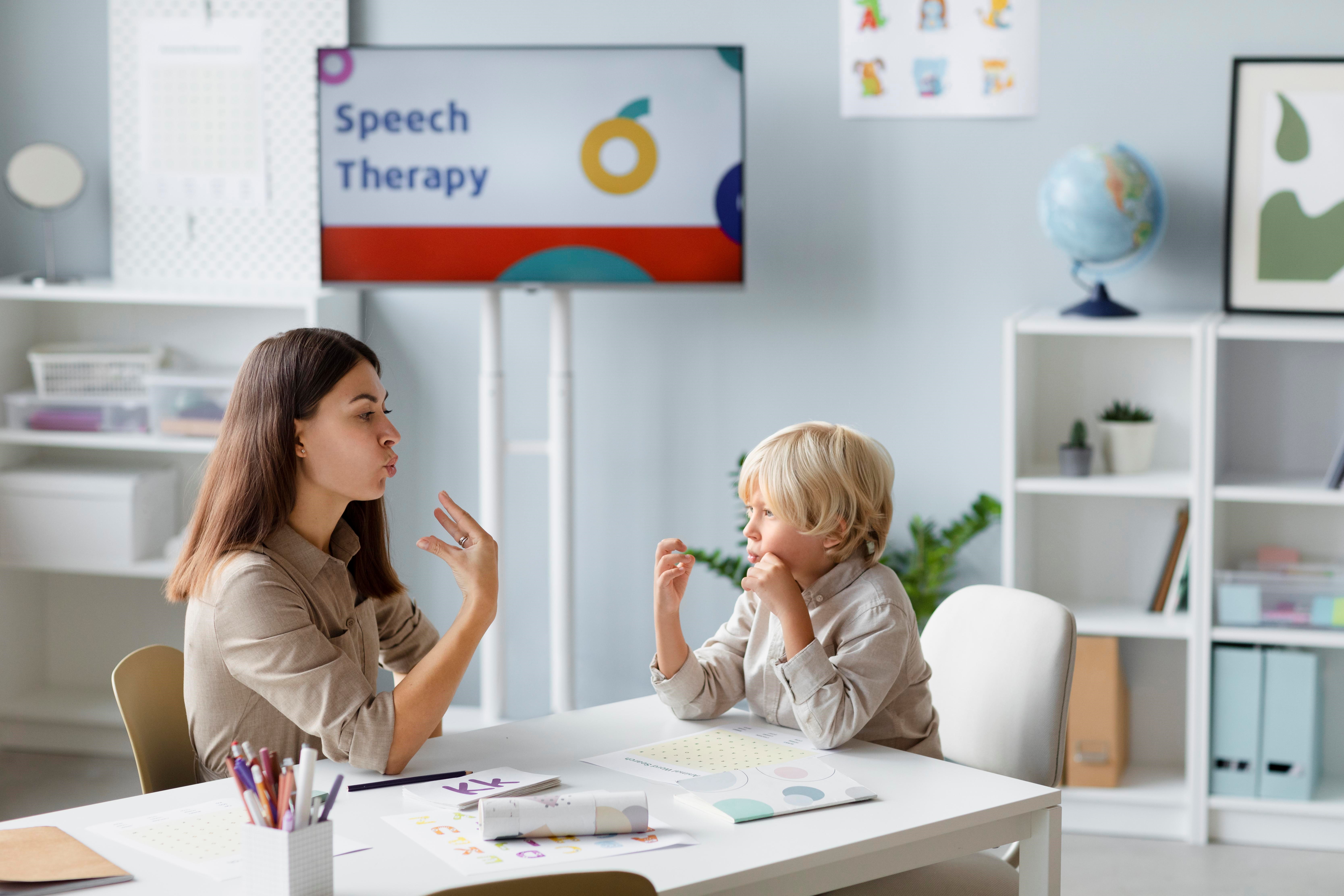
This is the part most parents find surprisingly fun to watch. Rather than sitting your child down with a clipboard and firing questions at them, therapists almost always use play as their main tool, especially with younger children. That might look like building a tower together, playing with a farm set, reading a picture book, or having a pretend tea party. Through this playful interaction, the therapist is quietly and skillfully gathering huge amounts of information: how your child copies sounds and words, how many words they use, whether they combine words into phrases, how they use gestures and eye contact, and how they respond when something does not go to plan.
For slightly older children, there might be more structured games mixed in, like naming pictures, following two step instructions, or having a go at some simple story retelling. It all still feels like a game though, so children rarely realise they are being assessed at all.
Formal Assessment Tools
Alongside all that lovely play based observation, therapists often use standardised assessments too. These are structured tasks with set questions, designed so your child's results can be compared fairly against typical development for their age. Do not worry if this sounds intense. In practice it usually just looks like pointing to pictures, answering simple questions, or repeating words and sentences. These tools help the therapist pinpoint specific areas, such as understanding vocabulary, using grammar correctly, or producing certain speech sounds clearly.
Looking At Speech Sounds
If speech clarity is a concern, the therapist will listen closely to how your child produces different sounds in words, at the beginning, middle, and end. They are checking whether any patterns crop up, for example swapping certain sounds for others, which is completely normal at younger ages but might need support if it continues past a certain point. They will often ask your child to name pictures or repeat words to get a clear sample across lots of different sounds.
Understanding Versus Talking
One really important thing a SALT assessment untangles is the difference between what a child understands and what they can say out loud. These two skills do not always develop at the same pace, and knowing which one needs the most support changes everything about what happens next. The therapist might give instructions of increasing complexity, or ask your child to point to objects, to get a clear sense of their understanding separately from their talking.
Pulling It All Together
Once the session wraps up, the therapist will start building a full picture of your child's communication skills. They will consider everything, your background information, what they observed during play, and the results of any formal tasks. From there, they will usually talk you through their initial impressions there and then, which is such a reassuring part of the process because you are not left wondering.
What Happens Next
Following the assessment, you will typically receive a written report outlining your child's strengths and any areas to work on, along with clear recommendations. This might include some fun activities to try at home, a course of therapy sessions either online or in your local area or simply a plan to keep an eye on things and review in a few months. Whatever the outcome, you will come away with a clear next step and practical ideas you can start using straight away.
The Main Takeaway
A SALT assessment is not something to feel anxious about. It is a warm, child led process designed to celebrate what your child can already do while gently identifying where a bit of extra support might help them flourish. Most children genuinely enjoy the session, and most parents leave feeling relieved to finally have some clarity and a plan in place.