Bringing the Christmas Light Trail Home: A Family Guide to Garden Displays
Few things excite small children quite like walking through a glowing Christmas trail. The tunnels of lights, the twinkling trees and the sense of being somewhere special make it a highlight of the season for plenty of families. Recreating a little of that wonder at home is easier than it sounds, and it turns the garden or front step into a place the whole household can enjoy.
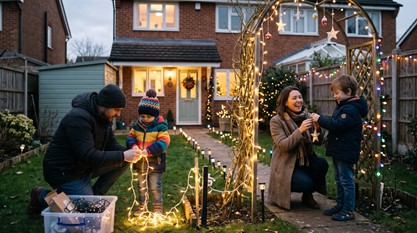
A home display also takes away some of the stress of a big day out. There are no queues, no car parks and no tired toddlers wilting in the cold. Everything's right there, with a warm kitchen only a few steps away.
Choosing the Right Lights for Outdoors
Weather is the main difference when picking Christmas outdoor lights, because cables, plugs and bulbs all need to cope with rain, frost and damp. Look for products clearly marked as suitable for outdoor use, with sealed connections and a weatherproof rating. Indoor strings can look identical but aren't built to survive a British December, and using them outside is a safety risk.
LED strings are a popular choice for families because they stay cool to the touch and use far less electricity than older bulbs. That makes them a gentler option around curious hands, and it keeps running costs low when lights are switched on for several hours every evening.
Let the Children Take Part
One of the best parts of a home display is involving the family from the start. Children can pick colours, decide which tree gets the most lights or choose where the glowing figures should stand. Giving each child a small job, such as holding the end of a string or passing clips, makes them feel part of the project without putting them near ladders.
Older children might enjoy planning the layout on paper first. Sketching the front garden and marking where the lights will go is a good way to introduce a bit of measuring, counting and design, and it tends to stop arguments on the day.
Creating a Mini Trail in the Garden
A trail doesn't need much space. A row of stakes along a path with lights wrapped around them creates a glowing walkway, and a simple arch made from a garden trellis can become a magical entrance. Lighting a tree from the base, working upwards, gives the same impression of height that makes larger trails so impressive.
Small touches make a big difference. Paper lanterns, a few battery-operated stars in a jar or a lit wreath on the shed door add variety and interest. Mixing warm white with one accent colour keeps things looking cohesive rather than chaotic.
Keeping Everyone Safe
Safety is worth planning for before the first light goes up. Outdoor plugs and connectors should be kept off the ground and away from puddles, and a weatherproof cover over any connection point is a good idea. Plugging in through a residual current device adds another layer of protection, and it only takes a minute to set up.
Cables should be fixed in place so nobody trips on them, particularly if visitors are arriving in the dark. A timer is useful too, since it removes the need to go outside in the cold to switch things on and off, and it makes sure everything is turned off before bedtime.
Making an Evening of It
The first night of switching on a display can become a small family event. Hot chocolate, blankets and a few festive songs turn it into a tradition that children look forward to each year. Some families like to invite neighbours or grandparents along, and others prefer to keep it as a quiet moment before the busier days ahead.
Photographs taken in front of the lights are a lovely way to track how much children have grown from one year to the next. Over time, those pictures become a record of the family's Christmases, with the display itself as a familiar backdrop.
Looking After Lights for Next Year
A bit of care when taking decorations down makes them last for years. Lights should be wound loosely around a piece of cardboard or a reel, which prevents tangles and reduces strain on the wires. Bulbs and plugs are worth checking before storage, and anything that looks damaged ought to be replaced rather than risked next season.
Labelled boxes save time in the following December, and a quick test of each string before it goes outside avoids the frustration of discovering a fault halfway up a ladder. Children can help here too, by winding the cables or choosing which box things belong in.
Keeping It Simple
A family display doesn't need to compete with the biggest house on the street. A few well-placed strings, a lit tree and a glowing doorway can capture the same feeling as a full-scale trail. What matters most is that the household enjoys making it, and that the lights bring a little warmth to the dark winter evenings.
Start small, build gradually and let the children lead where possible. By the time the lights come on, the display will already feel like theirs.
It also helps to remember that children rarely notice imperfections. A slightly wonky string or a missing bulb goes unnoticed when the whole display is glowing in the dark, and the pride of having helped build it lasts much longer than any technical flaw.