Beyond the Six-Week Check: A Practical Guide to Postnatal Physical Recovery
The six-to-eight-week appointment can feel like a finish line, especially when people ask whether you are ‘back to normal’. But recovery rarely follows a calendar so neatly. A general postnatal review matters, while ongoing heaviness, leaking or discomfort may call for a more focused conversation and an individual plan for rebuilding movement.
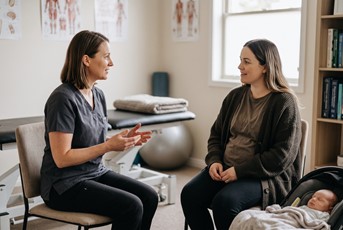
The Six-Week Check Is a Checkpoint, Not a Recovery Deadline
A postnatal GP review is an important opportunity to discuss your physical and emotional health, ask questions and identify whether further support is needed. NICE recommends that a GP carries out an assessment around six to eight weeks after birth, taking account of the time since delivery and responding to any concerns raised. That response may include referral to another service, such as physiotherapy, when it is needed. The appointment is not simply a pass-or-fail test of whether your body has fully recovered.
The review is broad by design. You can raise pain, bleeding, bladder or bowel changes, feeding difficulties, mood and any worries about daily activities. A routine appointment does not always include a detailed, movement-based examination of pelvic floor function, abdominal muscles or the way your body manages specific tasks like lifting or carrying. Some women may be told they can return to exercise without having had a thorough musculoskeletal or pelvic floor assessment. That does not mean a concern has necessarily been overlooked; a general review and a focused physical assessment serve different purposes. If you leave the check unsure about something, it is reasonable to ask what symptoms to watch for, what support is available locally, and when to follow up. NICE’s postnatal care recommendations also highlight discussing physical concerns and how to seek further help at postnatal contacts, not only at the final check.
Symptoms Worth Mentioning, Even When They Feel Common
Some changes after birth are common, but that does not mean you need to put up with them without support. Worth mentioning: urine leaking when you cough, sneeze, laugh or lift your baby; a sudden, hard-to-control urge to go; difficulty fully emptying your bladder; or a feeling of heaviness, dragging or a bulge around the vagina. These can relate to changes in pelvic floor function, but only a suitably qualified professional can properly assess what is happening and advise on next steps. You do not need to wait until a symptom feels severe before raising it with someone.
It is also worth discussing abdominal discomfort or a sense of weakness through your middle, ongoing back or pelvic girdle pain, and any difficulty returning to everyday tasks such as bending, carrying or standing for long periods. After a caesarean birth, concerns about the scar, tenderness, restricted movement or discomfort when lifting are equally valid topics for a check-up. Recovery is shaped by the type of birth, sleep, feeding, general health and the support available at home, so comparing your timeline with someone else’s rarely helps. NICE guidance on pelvic floor dysfunction supports raising these symptoms and being offered appropriate care after birth. Noting down what you notice, when it happens and what makes it better or worse can make a follow-up conversation easier.
Rebuilding Movement Gradually, at Your Own Pace
There is no single exercise timetable that suits every new parent. The UK Chief Medical Officers’ 2026 guidance advises starting or restarting activity gradually, listening to your body and beginning gently, with the right pace shaped by your delivery and how you feel day to day. Comfortable short walks and ordinary daily movement can be a manageable starting point for many people, rather than a structured workout.
Slow, gentle breathing and simply noticing how your abdomen and pelvic floor respond during everyday movements, such as standing up or lifting your baby, can help you reconnect with your body before adding anything more demanding. Pelvic floor exercises are encouraged as soon as you feel able, and the guidance recommends continuing them daily; if you are unsure how to do them correctly, or they cause pain, it is worth asking a health professional for guidance rather than pushing through discomfort. Once it feels appropriate for you, the longer-term aim in the guidance is to build back up towards at least 150 minutes of moderate-intensity activity each week. The UK guidance on activity after childbirth is not a personal exercise prescription for every reader. If movement brings on increasing pain, leaking, heaviness or other symptoms that concern you, it makes sense to pause and seek individual advice rather than working through it.
When a Focused Postnatal Assessment Can Help
If you have ongoing symptoms, feel unsure how to return to activity, or would like a closer look at how your body is functioning, a focused postnatal assessment may be one option. Unlike a general health review, it can spend more time looking at how pelvic floor function, abdominal strength, posture and movement fit together. A practitioner may ask about your birth and recovery, discuss the activities that feel difficult, and agree what to assess with your consent. You can ask what an examination involves and choose whether to proceed; an internal examination should never be assumed or carried out without your informed agreement.
A holistic approach can bring physiotherapy and osteopathy together where both are appropriate: physiotherapy can guide a gradual return to strength and activity, while osteopathy can address movement and musculoskeletal discomfort. Coordinating that advice around someone’s symptoms and goals may help them make progress through recovery without promising a particular healing speed. Serving its local community since 1999, Brixton Therapy Centre has a long-standing reputation in South London. Its expert team takes a collaborative approach to care, helping mothers rebuild physical confidence with support suited to their needs. Introduced as a gold standard for postnatal care, the Brixton Therapy Centre Mummy MOT is an assessment covering pelvic floor function, core strength, posture and musculoskeletal health, followed by a personalised plan with guidance and exercises. The assessment is carried out by osteopaths registered with the General Osteopathic Council who have postgraduate training in postnatal care. This kind of appointment can complement routine NHS care; it does not replace a GP or midwife review, or any referral that may be needed.
Making the Next Step a Conversation
You do not need to have a diagnosis or a perfectly worded question before asking for help. Tell your GP, midwife or another suitable health professional what you notice, when it happens and how it affects everyday life. You can ask whether further assessment, physiotherapy or another service would be appropriate, and what to do if symptoms persist. If you choose a separate postnatal assessment, consider asking what it covers, who will carry it out and how recommendations will fit alongside your existing care. The six-week check can be an important checkpoint, but recovery is individual; support should help you make informed, manageable choices rather than leave you feeling under pressure to be ‘back to normal’.