Autumn, Toddlers, and the Great Outdoors: Why Small Garden Moments Matter More Than Perfect Ones
There’s something about autumn that sneaks up on you when you’re parenting small children. One minute you’re clinging onto the last scraps of summer, barbecues that may or may not be rained on, kids running around in T-shirts at 5 PM, and a vague belief that you’ll “sort the garden out properly this weekend”, and the next, you’re stepping outside in a coat you forgot you owned, wondering how everything suddenly got so damp.
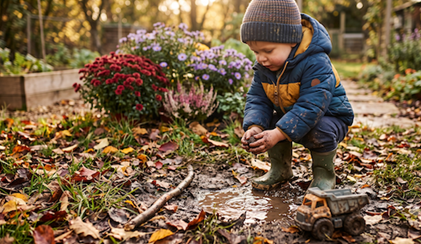
If you’ve got little ones, the garden at this time of year tends to become less of a project you actively maintain and more of a space that just exists alongside the daily chaos. And honestly, that is completely fine. In fact, it might even be better.
One of the things I’ve noticed over time is that children don’t care if the garden is tidy or Pinterest-worthy. They care if it feels like a place where they can explore, get muddy, run in circles, and invent a game that makes absolutely no sense to adults.
Supporting that kind of play usually just takes a few simple, low-effort seasonal touches. Popping in some reliable autumn bedding plants keeps colour and life in the garden when the summer flowers start to fade, and you won't need a full overhaul or a complicated master plan to do it. It’s not about gardening perfection; it’s about creating a nice backdrop for everyday childhood.
The Garden as a Child’s First Outdoor Classroom
If you spend enough time watching toddlers outdoors, you realise quickly that they treat the backyard like a giant, free science lab. A muddy puddle becomes a major physics experiment. A pile of crunchy leaves is a full sensory experience. A random stick becomes... well, usually something incredibly important that must not be confiscated under any circumstances.
This is why a slightly chaotic garden is actually more valuable than a pristine one. It doesn’t need to be designed for adults to admire from a distance. It needs to be usable.
And usable usually means forgiving:
* Grass that doesn’t mind being aggressively trampled by plastic trucks.
* Plant borders that can survive an accidental football impact.
* Spaces where a child can dig, pour, and stack things without you feeling like you need to apologize for the mess.
Letting Go of the Magazine-Spread Ideal
At some point in the parenting journey, most of us quietly give up on the idea that our home environment is going to look like a glossy magazine spread. The exact same mental shift needs to happen outside.
There’s a great moment when you realise the garden isn't a separate chore with a clear finish line. It’s just another part of family life. Like everything else, it changes depending on the season, the weather, and how much sleep everyone managed to get the night before.
Autumn has a way of making this glaringly obvious. Leaves accumulate overnight. Plants stop growing at the speed you want them to. And there is always, without fail, one child who decides that right now is the perfect time to "help" with digging, usually five minutes after you’ve finally tidied a flower border. Rather than fighting it, there’s something incredibly freeing about just leaning into it.
Why Chaotic Outdoor Time is Still a Win
It’s easy to assume that if the garden isn’t perfectly tidy, it isn’t really usable. But kids don’t see it that way at all. In fact, they usually thrive in slightly messy, unpredictable outdoor spaces.
There’s more freedom there. There's more room for imagination, and way less pressure to "behave correctly."
A garden that isn’t overly manicured naturally invites curiosity. A corner left a little bit wild becomes a secret discovery zone. A random collection of empty plastic pots becomes a game that lasts for an hour. Even a simple pile of fallen leaves is premium entertainment for far longer than you’d expect. From a parenting perspective, that matters. Anything that gets kids moving outside and engaged without a screen in front of their face is a massive win on a busy day.
The Reality of Autumn with a Toddler
Of course, let's not pretend it's all peaceful outdoor play and wholesome, picture-perfect moments. Anyone who has taken a toddler outside in October knows it is usually a very loud mix of:
* "I don’t want to wear my coat."
* "I definitely need to wear my coat immediately and also take it off again right now."
* Mud appearing in places you didn’t think mud could physically reach.
* Intense, urgent requests for snacks the absolute second your foot crosses the threshold.
* At least one wellie boot mysteriously going missing in the grass.
But between the tantrums, you get the quieter moments that make you pause. You watch a child crouch down to inspect a bug with absolute fascination, or you hear genuine, unprompted laughter. Sometimes, you get a glorious ten-minute window where they are so absorbed in what they’re doing that they don’t need you for a single thing. Those moments are easy to blink and miss if you’re too focused on how neat the garden should look.
Simple Seasonal Tweaks That Work with Real Life
Keeping a garden looking alive during autumn isn’t about taking on a massive project. It’s about small, manageable changes that fit around your schedule.
You don’t need perfect borders or a curated colour scheme. You just need continuity, something that still feels inviting when the temperature drops and the daylight starts disappearing earlier than anyone would like.
Simple, seasonal planting keeps the space from looking like it’s completely shut down for the winter. When the backyard still feels welcoming, children will naturally keep pulling on their boots to use it.
A Space That Grows with the Chaos
What often gets overlooked is how much a garden naturally evolves alongside your kids. What starts out as a soft grass extension of the nursery eventually turns into a football pitch, then a social hangout space, and then something in between all of those things.
If you look at it over the long game, the garden is constantly adapting to whatever your family needs at the time. It doesn’t need constant, stressful reinvention, just gentle, seasonal adjustments. Autumn is just a normal part of that rhythm. It’s a physical reminder that nothing stays the same for long, and that’s not something we need to fight against.
Good Enough Really is Enough
If parenting teaches you anything, it’s that "perfect" is an absolute trap. Sustainable is better. Manageable is better. A garden that your children actually play in is a million times better than one you’re constantly stressed about maintaining.
So if your outdoor space feels a bit messy right now, or if you’re noticing way more dead leaves than actual flowers, you are just in a completely normal stage of family life. The goal isn’t to control every single corner of the yard. It’s just to make sure there’s still room for the kids to run around, explore, and exist outside while the weather permits. Everything else is just background detail.