A Parent’s Guide to Choosing a Kids Electric Scooter
Your child wants a kids electric scooter. You have probably already heard the same argument: "Everyone else has one."
Then you start shopping.
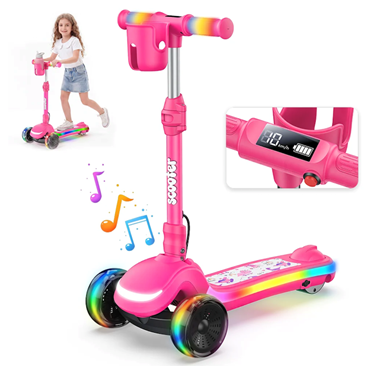
Suddenly, there are different speeds, motors, batteries, wheel sizes, braking systems, age limits, and weight limits. One model looks perfect until you notice its speed. Another seems safer but may be too small within a year.
So how do you choose?
The smartest approach is to stop shopping by appearance and start shopping by rider suitability. A good scooter should match your child's age, size, coordination, experience, and riding environment - speed and battery range should come later.
Here is the practical framework parents can use before spending their money.
Choosing by Age: A Quick-Reference Table
Age is the fastest way to narrow the field, even though it's not the only factor. Use this as a starting point, then confirm against your child's actual balance and confidence.
Age Range / Typical Max Speed / Recommended Weight Limit / Best Suited For
4-6 years / 3-5 mph / Up to 35 kg (77lb) / First-time riders, supervised private spaces only
7-9 years / 5-8 mph / Up to 45 kg (99lb) / Confident beginners, driveways and gardens
10 - 12 years / 8-10 mph / Up to 60 kg (132lb) / Experienced riders, wider open spaces
13+ years / 10-15 mph / Up to 70-100 kg (154-220lb) / Teens, near-adult scooters with stronger brakes.
These figures are typical industry ranges, not a substitute for the specific manufacturer's stated limits - always check the individual product page before buying.
What Age Is Appropriate for an Electric Scooter?
There is no single age that makes every child ready. Readiness depends on balance, coordination, judgment, physical size, and the manufacturer's stated age limit.
Some manufacturers market children's models from around age six, while many mainstream models start around age eight. Some paediatric safety organisations take a more conservative position - the Paediatric Orthopaedic Society of North America has cited age eight as a minimum for scooter riding, while other paediatric guidance recommends avoiding motorised scooters for younger children.
A confident eight-year-old with excellent balance may handle a suitable beginner model better than an older child who struggles with braking or steering.
Before buying, ask:
* Can my child balance confidently?
* Can they stop on command?
* Can they follow safety instructions consistently?
* Can they steer around an obstacle without panicking?
* Are they physically within the manufacturer's limits?
If the answer is no, waiting is usually the better decision.
How Fast Should a Kids Electric Scooter Go?
For children, lower speed is usually a feature rather than a limitation. A beginner should have enough speed to enjoy riding but not so much that braking and reaction become difficult.
Current children's models commonly fall around 3 to 10 mph depending on age band, with many offering beginner and advanced riding modes. Prioritise adjustable speed over maximum speed - your child's ability will change, and a scooter that can be dialled down for the first few rides and opened up later is worth more than one with a single fixed top speed.
The important question is not "How fast can it go?" Ask instead: "How easily can my child control it when something unexpected happens?"
Why Brakes Matter More Than Motor Power
A powerful motor looks impressive on a product page. It should not be your priority.
A child needs predictable acceleration and reliable braking far more than extra motor power. The CPSC specifically recommends learning how the brakes work and testing stopping distance, since braking performance varies significantly between scooters.
Before independent riding, practice in an empty, controlled area:
1. Start slowly.
2. Ride in a straight line.
3. Apply the brake.
4. Stop completely.
5. Repeat several times.
6. Practice turning and stopping together.
Knowing how to ride a kick scooter does not automatically mean knowing how to handle a powered one - the motor changes the equation.
How Do You Choose the Right Size?
Check rider weight, handlebar height, deck size, and scooter weight instead of relying on age alone. A scooter that's too large can be difficult for a child to steer; one that's too small becomes uncomfortable as they grow.
The manufacturer's maximum rider weight is especially important - exceeding it can affect acceleration, handling, braking, and overall performance.
There's also a common mistake here. Parents sometimes buy a much larger scooter hoping it will "last for years." That can backfire - a scooter that's difficult to control today provides little value. A slightly smaller, age-appropriate scooter is often the smarter first purchase.
Which Safety Features Should Parents Look For?
Prioritise speed control, dependable brakes, stable tires, suitable deck space, visibility features, and clear manufacturer instructions. Don't let LED lights or Bluetooth connectivity distract you from the basics.
A useful checklist:
* Beginner speed mode
* Reliable braking system
* Suitable wheel size
* Stable deck
* Comfortable handlebars
* Working lights where appropriate
* Bell or warning mechanism
* Clear battery instructions
* Replacement parts availability
* Manufacturer warranty and support
The CPSC also recommends checking the handlebars, brakes, throttle, tires, cables, lights, bell, and frame before every ride - a five-minute inspection that can prevent a surprisingly avoidable problem.
Battery, Charging, and Weather Safety
Treat the battery as an important safety component, not simply a source of range. Use the correct charger and follow the manufacturer's charging instructions - never improvise with an incompatible one.
The CPSC recommends using the supplied or manufacturer-approved charger and staying present while charging. It also advises against charging micromobility products overnight or while away from home, since lithium-ion battery failures can create serious fire risks. Make charging an adult task - a child may be responsible enough to ride the scooter without being responsible enough to charge it safely.
Water is a separate risk that's easy to overlook. Most kids' electric scooters are not waterproof unless specifically stated. Riding in the rain or through puddles can damage the battery and electrical components, which can in turn create a safety hazard rather than just a repair bill. If the listing doesn't mention water resistance, assume it has none.
Does Your Child Need Protective Gear?
Yes. At minimum, use a properly fitted helmet. Younger or inexperienced riders also benefit from knee and elbow protection.
The CPSC recommends helmets and notes that knee and elbow pads help reduce injuries from falls and collisions. Protective equipment only works if children actually wear it, which means establishing the rule before the scooter arrives: no helmet means no ride. It's far easier to set that expectation on day one than after a child becomes attached to riding without it.
Where Will Your Child Ride - and Is It Legal?
This question can change which scooter makes sense, and it's one many buying guides skip entirely.
In the UK, privately-owned electric scooters are generally legal to use only on private land, with the landowner's permission. They are not legal for use on public roads, cycle lanes, or pavements. This applies to children's models just as much as adult ones - a scooter isn't automatically exempt because it's built for kids. Always check current local rules before assuming a public space is fair game, since regulations can and do change.
Surface matters too. Small scooter wheels can react badly to cracks, stones, and uneven surfaces - the CPSC warns that obstacles can cause small tires to stop suddenly and throw riders off. For beginners, choose a controlled environment: avoid traffic, wet surfaces, loose gravel, and steep hills.
Never allow two children to ride one scooter together. The CPSC specifically recommends one rider per scooter, with no exceptions for "just around the corner."
Which Brands Are Worth Considering?
Parents will encounter names such as Razor, Segway-Ninebot, Jetson, GoTrax, Hiboy, Hover-1, and isinwheel when researching children's scooters. The important point isn't that one brand is automatically best - compare individual models against your child's age band, weight, and the checklist above.
A trustworthy manufacturer makes its specifications easy to find. If you can't quickly locate the recommended age, maximum rider weight, top speed, charging instructions, warranty information, and replacement-parts support, treat that as a warning sign, not an oversight.
The 10-Minute Pre-Purchase Test
Before clicking "buy," answer these ten questions:
1. Is my child developmentally ready?
2. Does the scooter match their weight?
3. Is the maximum speed appropriate for their age band?
4. Does it have a suitable beginner mode?
5. Can my child operate the brakes confidently?
6. Is the deck stable enough?
7. Are replacement parts available?
8. Does the manufacturer provide clear charging instructions?
9. Where will my child actually ride, and is it permitted there?
10. Do we have the correct safety gear?
If you can't answer several of these, keep researching. That extra ten minutes is worth far more than saving a few dollars on the purchase.
Frequently Asked Questions
What is the right age for a kids electric scooter?
There's no universal minimum, but most mainstream models are built for ages six to eight and up, with some pediatric guidance recommending age eight as a safer starting point. Readiness depends more on balance and judgment than age alone.
How fast should a kids electric scooter go?
Beginner models typically top out around 3–5 mph for younger children, rising to 8–10 mph for confident 10–12 year olds. Adjustable speed modes matter more than the maximum number on the box.
Are kids electric scooters legal to ride in the UK?
Privately-owned electric scooters, including children's models, are generally legal only on private land with permission. They aren't legal for use on public roads, pavements, or cycle lanes.
What safety gear does my child need?
A properly fitted helmet is essential. Knee and elbow pads are strongly recommended, especially for younger or less experienced riders.
How long does a kids electric scooter battery last?
Range varies by model, rider weight, and terrain, but most children's scooters offer relatively short ranges per charge. Always charge under adult supervision and never overnight.
Can two children ride one electric scooter together?
No. Manufacturers and safety bodies consistently recommend one rider per scooter - extra weight affects braking distance and stability.
What weight limit should I check before buying?
Always check the manufacturer's maximum rider weight, not just the age recommendation. Exceeding it affects acceleration, braking, and handling.
Is it safe to ride a kids electric scooter in the rain?
Not unless the scooter is specifically rated as water-resistant. Riding in wet conditions can damage the battery and create electrical hazards.
How do I know if a scooter is the right size for my child?
Check handlebar height, deck size, and scooter weight against your child's height and confidence, not just the age label on the box.
What brands make reliable kids electric scooters?
Razor, Segway-Ninebot, Jetson, GoTrax, Hiboy, Hover-1, and isinwheel are commonly recommended. Compare individual models rather than choosing by brand name alone.
Final Thoughts: Buy for Control, Not Bragging Rights
The best scooter for your child is not necessarily the fastest model, the most expensive model, or the one with the longest advertised range. It's the one your child can control confidently and responsibly.
Start with readiness, then consider size, speed, braking, construction, battery safety, riding environment, and local rules. Treat protective equipment as part of the purchase, not an optional accessory.
So before your child takes that first exciting ride on their new kids electric scooter, ask one final question: would you trust them to control it if something unexpected happened five seconds from now? If the answer is yes, you're much closer to making the right choice.