6 Playroom Ideas That Grow With Your Child From Toddler to Primary School
Playrooms that last from the toddler years into primary school rely on storage, furniture and floor space that can change role as a child grows. Toddlers want things they can reach and tip out, while six and seven-year-olds want somewhere to make, read and do homework. The ideas below can be adjusted rather than replaced, and none of them needs a large room.
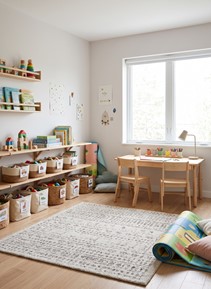
1. Low Open Shelving Within Easy Reach
Start with shelves at toddler height and open baskets that a two-year-old can empty without help. Open storage suits a child who can't read labels yet, and later you can add picture or word labels and move the baskets up a shelf. Putting boxes and baskets at an easy-to-reach height also makes tidying something a child can manage, which is how it becomes a habit. Fix freestanding units to the wall.
2. A Craft and Homework Spot by the Window
Natural light makes a spot by the window the best place for painting, sticking and, later, homework, so check which wall gets the most daylight before placing the table. A toddler can use a low table there on a wipeable mat, and a school-age child can keep the same spot with a lamp. Where the house has them, bay and bow windows extend the room outwards, and the deeper alcove suits a low craft table with storage underneath.
3. A Table and Chairs That Adjust
Choose a table with legs that can be raised, because a height that suits a two-year-old will be too low within a few years. Adjustable chairs, or a stool with a footrest, keep growing feet supported, so the same set works for colouring at three and writing at seven. Pick a surface that wipes clean and copes with paint, glue and modelling clay.
4. Floor Space That Stays Clear
Leave the middle of the floor open and keep furniture around the edges, because toddlers build, crawl and push toys across it while older children lay out board games and construction sets. A washable play mat or foam tiles cover hard floors and roll up when the room needs to work differently, and a flat-pile rug suits toy cars and sweeps clear easily.
5. A Reading Corner Children Can Use Alone
Give the books their own corner with the covers facing out, so a child who can't read yet can still choose by picture. Low seating tucked into a corner feels sheltered, and a bean bag or floor cushion suits a three-year-old as well as a seven-year-old. Swap picture books for chapter books on the same shelf later, so the corner keeps working without being rebuilt.
6. A Wall That Changes With Their Interests
Fix a magnetic board, corkboard or strip of picture ledges at child height, and change what goes on it as interests move on. A toddler might display chunky books and photographs, a five-year-old will want drawings and sticker charts, and a seven-year-old can pin up a homework timetable. Revisiting the wall each term, along with a swap of which toys are out, keeps the room feeling fresh without anything new being bought.